Blockchain is moving into a more practical role across payments and digital finance. It can support the global economy by giving businesses and financial institutions an infrastructure layer for cross-border payments, settlement, stablecoin operations, digital asset management, conversion, and treasury workflows. The economic value comes from connecting blockchain networks with software that makes these functions usable inside existing financial operations.
At Money20/20 Europe, Pavel Kashuba, Strategic Leader at Coinspaid, discussed this shift in an interview with Fintech Futures.
Watch the full interview:
Blockchain is becoming infrastructure
For businesses, blockchain becomes useful when the underlying networks can be connected to real financial operations. Kashuba summarized Coinspaid’s role in that shift during the Money20/20 interview:
“Coinspaid Solutions is the company that provides and constantly builds and develops the blockchain infrastructure for the global economy.”

Payment acceptance is only part of that infrastructure. Kashuba described a wider software environment that includes exchange, custody-related functionality, and other systems needed to make digital asset operations manageable for businesses.
At the enterprise level, blockchain infrastructure can include:
- Connectivity to multiple blockchain networks
- Transaction processing
- Wallets and digital asset management
- Crypto-to-fiat and asset conversion
- Liquidity management
- Compliance and transaction monitoring
- Settlement
- Reconciliation
- APIs connecting blockchain functions with existing financial systems
Together, these capabilities turn individual blockchain networks into an operational layer that a bank, payment company, or other business can incorporate into its existing technology environment.
How can blockchain infrastructure improve global payments and settlement?
Blockchain adds another financial rail to the infrastructure businesses already use. It doesn’t require institutions to abandon bank transfers, cards, or other established payment methods.
The additional rail can support several types of activity:
| Business need | Role of blockchain infrastructure |
|---|---|
| Cross-border payments | Connects businesses with blockchain-based value transfer across markets |
| International settlement | Supports settlement through digital assets and blockchain networks |
| Stablecoin operations | Enables businesses to send, receive, manage, and settle stablecoins |
| Digital asset transactions | Provides the technical environment for moving blockchain-based assets |
| Conversion | Connects digital assets with other tokens or fiat workflows |
| Treasury | Supports asset movement, liquidity, and balance management |
| Merchant operations | Lets businesses incorporate blockchain assets into payment and settlement flows |
An additional blockchain rail can support global reach, 24/7 operations, programmable transactions, digital assets, and API-based infrastructure. Its suitability depends on liquidity, compliance requirements, asset and network support, and the existing banking setup.
Stablecoins are an important part of this environment, but their use still depends on the underlying networks and operating processes. Kashuba noted that most stablecoin platforms ultimately operate on blockchain networks that already exist. Enterprises therefore need infrastructure that can manage those networks, along with the liquidity, conversion, and settlement processes surrounding stablecoin operations.
Enterprise adoption depends on making blockchain simpler
Blockchain infrastructure becomes more useful to businesses as less of the underlying technical complexity reaches the people operating it.
In the Money20/20 interview, Kashuba identified 2 requirements for wider enterprise adoption. The first was education and a better understanding of blockchain. The second was software capable of managing different blockchains securely while keeping that complexity away from enterprise operators. He framed the design goal as “making it secure, but making its security not complex,” so enterprise operators can use the system without carrying that technical complexity themselves.
A financial institution using several blockchain networks shouldn’t have to expose its operations team to every technical difference between them.
The infrastructure layer can manage processes such as network selection, network load, transaction routing, confirmations, token conversion, liquidity, and network-specific operational risks. Business users can work with payment, treasury, or settlement workflows instead of managing blockchain mechanics directly.
Kashuba linked the challenge to multi-chain operations, noting that receiving tokens across more blockchains increases the operational burden. Conversion between tokens, movement between blockchain and fiat systems, transaction speed, and network conditions all become part of the operating environment.
AI and APIs may change how financial infrastructure is used
The next change may happen at the interface between users and payment systems.
Kashuba argued that AI agents could reduce the importance of conventional payment pages. In his view, systems will increasingly communicate through APIs, while the user interacts primarily with an AI agent.
The transition can be represented simply:
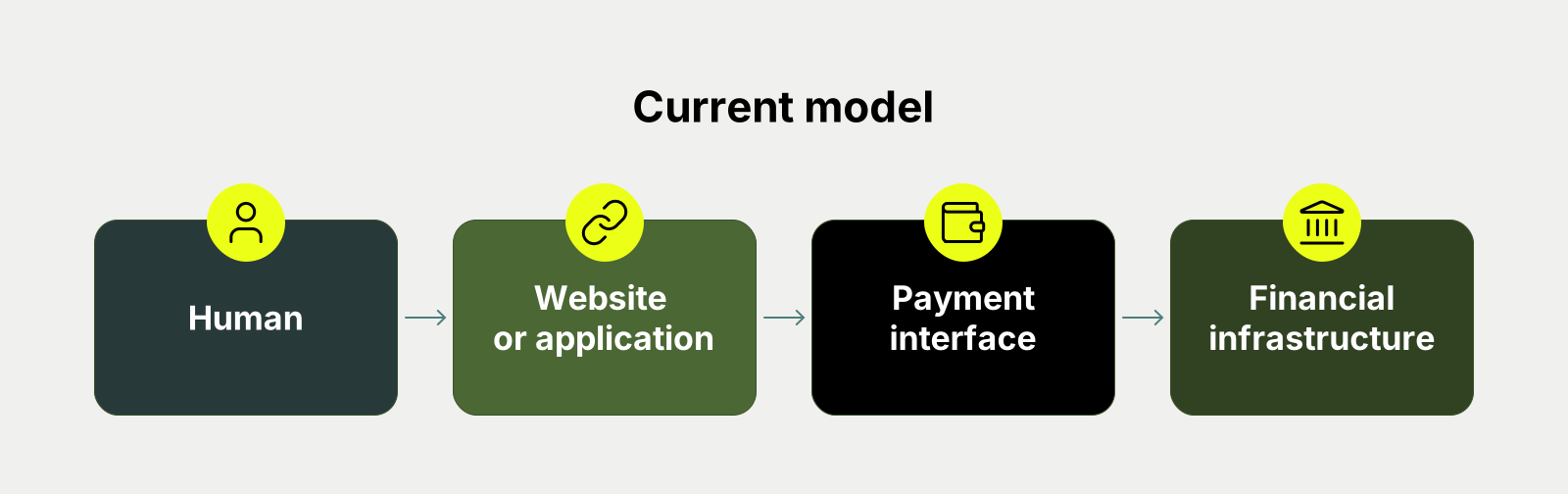
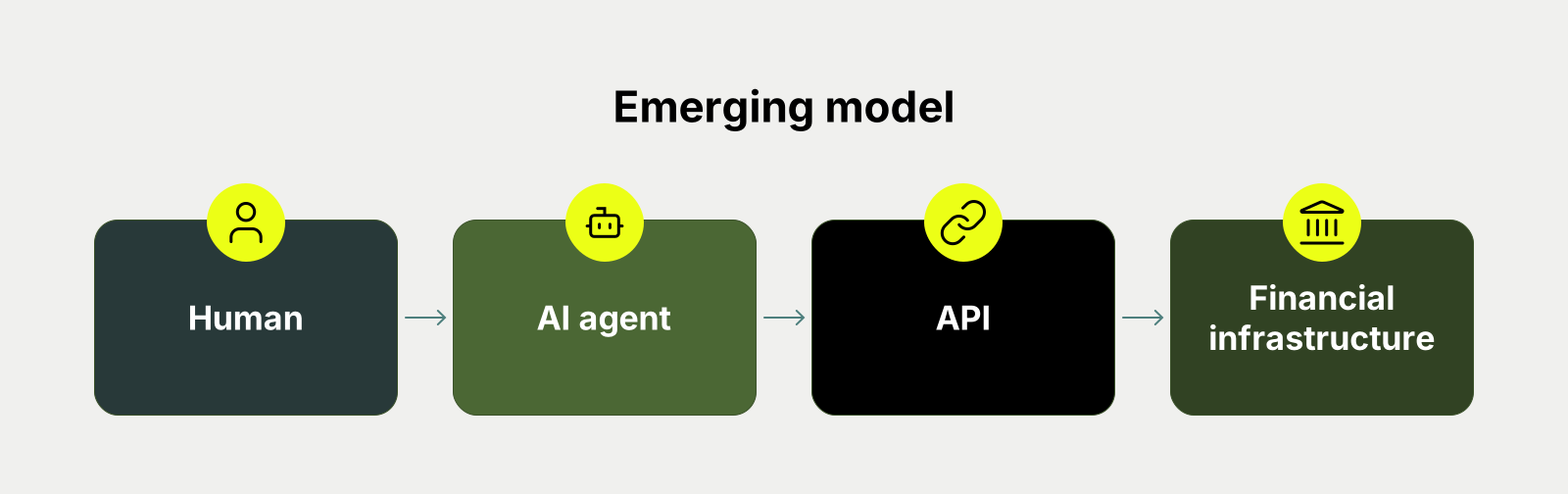
This shift would increase the importance of reliable APIs and machine-readable financial services. Authorization, security, compliance, settlement, and interoperability would still need to function when a software agent initiated the transaction.
AI increases demand for programmable financial infrastructure that software can access directly, regardless of the underlying rail. Blockchain can serve as one of those rails, particularly for digital assets and blockchain-based settlement.
The user experience may therefore become simpler while the infrastructure underneath it becomes more sophisticated.
What makes blockchain infrastructure enterprise-ready?
As more companies enter digital asset markets, businesses need a practical way to distinguish infrastructure providers with mature operating capabilities from companies with limited experience.
Technical expertise
Blockchain infrastructure requires people who understand how different networks behave in production. Kashuba placed particular weight on genuine blockchain engineering knowledge and teams with deep involvement in the technology.
Expertise matters because multi-chain systems need to handle network behavior, transaction execution, conversions, and other operational details without transferring those issues to the customer.
Security and operational maturity
Security has to work within normal business processes. An enterprise system can be technically secure and still be difficult to operate if every transaction requires specialist blockchain knowledge.
Operational maturity therefore includes secure transaction handling, reliable infrastructure, manageable controls, and processes that can function consistently as transaction volume or network coverage grows.
Regulatory approach
Kashuba framed regulatory maturity around understanding which frameworks and licensing requirements apply to particular transaction models, jurisdictions, and services. In the interview, he connected clearer regulatory frameworks with increased interest from banks and large financial institutions that previously approached blockchain more cautiously.
Reputation and operating history
Track record matters in an infrastructure market where technical failures can affect financial operations.
Kashuba cited reputation within the blockchain industry and a provider’s operating history as useful signals when businesses evaluate potential partners.
A concise enterprise checklist therefore includes:
- Blockchain engineering expertise
- Security and operational maturity
- Regulatory understanding
- Operating history and reputation
- Multi-chain capabilities
- Liquidity and conversion workflows
- API integration
- Settlement
- Reporting and reconciliation
Which blockchain infrastructure providers support global payments, settlement, and digital asset operations?
Blockchain infrastructure providers in this category connect blockchain networks with business and financial operations.
Their software may cover payments, wallets, digital asset management, stablecoin workflows, conversion, liquidity, compliance, settlement, reconciliation, and integration with existing financial systems. The exact scope varies by provider.
Coinspaid is one provider operating in this segment.
The company describes its role around blockchain infrastructure for businesses and cites 11+ years of blockchain expertise. Its positioning connects blockchain networks with payment, settlement, conversion, and digital asset workflows for business users.
In the interview, Kashuba described the company’s work as building infrastructure that lets merchants interact with blockchain assets while software underneath manages the broader operational environment.
For buyers, the architecture behind the service is the practical point of comparison. A provider supporting global financial operations needs to connect blockchain functionality with the systems businesses already use and make clear which responsibilities remain with the customer, external financial providers, and the infrastructure vendor.
Blockchain infrastructure may become increasingly invisible
Mature financial infrastructure usually becomes less visible to the person using it.
The same principle can apply to blockchain. A business may use blockchain-based settlement without asking staff to work directly with individual networks. A customer may pay through a familiar application while the infrastructure manages transaction routing, asset conversion, compliance, and settlement underneath.
This can place blockchain behind several types of financial activity:
- Global payments
- Stablecoin settlement
- Treasury operations
- Digital asset services
- AI-initiated transactions
- Financial applications
The role of blockchain infrastructure in the global economy can therefore grow without requiring every business or user to interact directly with blockchain technology.
Kashuba’s broader view at Money20/20 centered on this infrastructure layer. Networks provide the technical foundation, while software makes them usable for payments and other commercial financial operations. As those systems become easier to integrate and operate, blockchain can function as one more part of the financial technology stack.
Blockchain infrastructure is the software layer that connects blockchain networks with business operations such as payments, digital asset management, conversion, settlement, compliance, and reconciliation. At the enterprise level, it also abstracts network-specific complexity behind workflows and APIs.
It can provide an additional rail for cross-border transactions, digital asset payments, stablecoin settlement, and other global financial flows while connecting those activities with existing business systems.
Financial institutions need secure operations, multi-chain capabilities, regulatory awareness, reliable APIs, liquidity and conversion workflows, settlement, and reconciliation.
Providers in this market connect blockchain networks with payment and financial workflows. Coinspaid is one example and describes its business around blockchain infrastructure for companies using payments, settlement, and digital assets.