L1 blockchain is the base network protocol that records transactions and keeps a shared, synchronized state of the entire ledger. Direct access to the blockchain means interacting with it through blockchain nodes, RPC calls, and protocol data.
It’s technically possible to use direct access to run business operations, but most enterprises use higher infrastructure layers to avoid complexity, technical debt, and growing costs. A typical business will find it easier to access the blockchain through a payment gateway instead of building their own systems of settlement and reporting.
Major networks like Bitcoin, Ethereum, or Solana have their own node software, transaction model, fee rules, and validation design.
| L1 element | Description | What it does |
|---|---|---|
| Base blockchain layer | The shared ledger and network state. | Records transfers and contract activity. |
| Transaction execution | The process that applies a transaction to the network state. | Determines whether a payment or contract call succeeds. |
| Consensus | The rules that help the network agree on which blocks are valid. | Gives a shared source of truth. |
| Nodes | Computers that run blockchain client software. | They validate data and expose network access. |
| Network validation | The rejection of invalid blocks, invalid transactions, or invalid state changes. | It protects protocol-level correctness. |
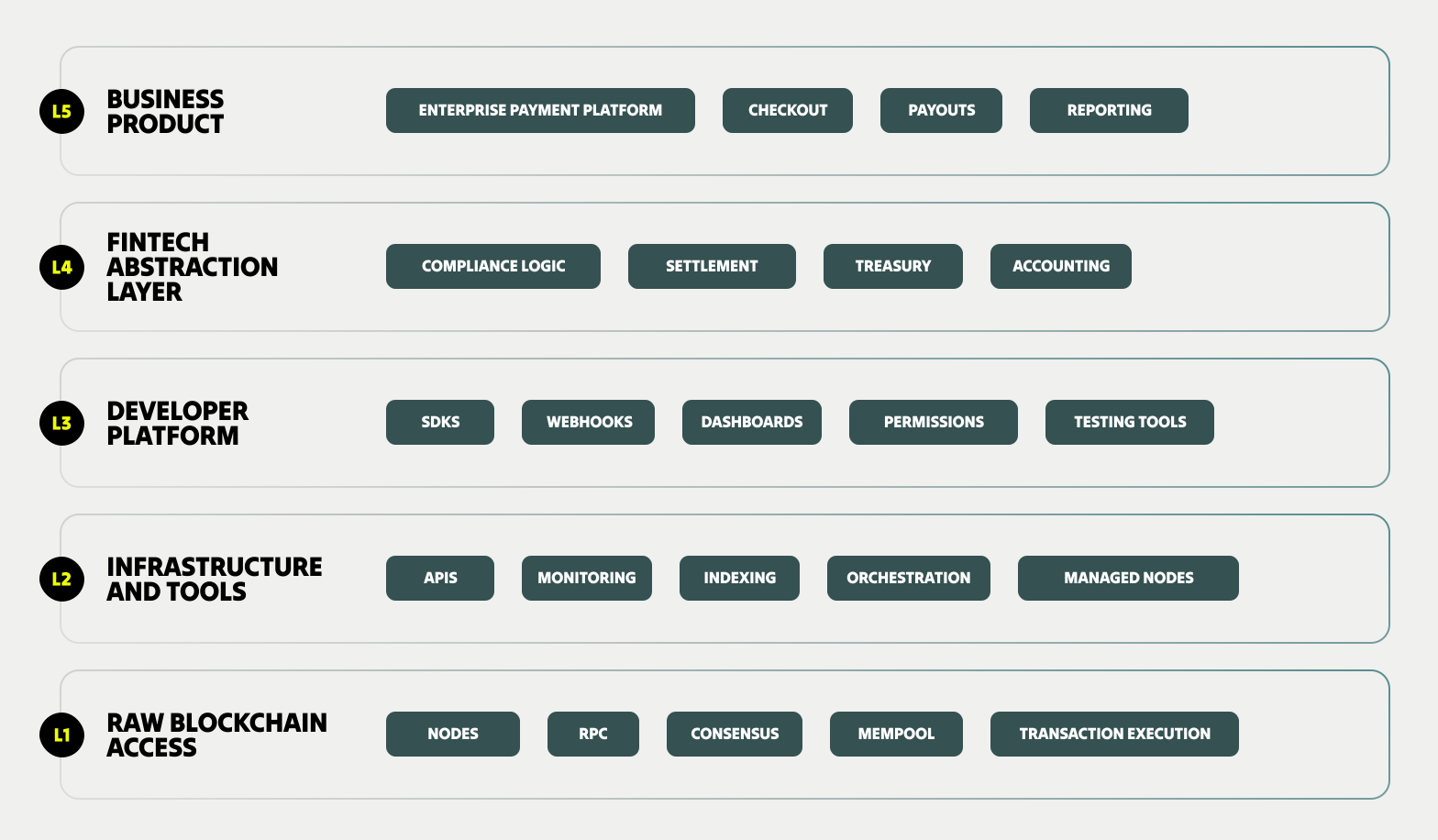
What is raw blockchain access?
Raw blockchain access involves direct interaction with blockchain networks through nodes, Remote Procedure Calls (RPC), and protocol-level data.
In blockchain systems, RPC lets software ask a node for data or submit a signed transaction.
| Area | Raw blockchain access | Business infrastructure |
|---|---|---|
| Node management | The company runs or manages nodes. | Managed infrastructure handles node operations. |
| Integrations | Each chain needs custom work. | APIs and orchestration standardize chain access. |
| Monitoring | Teams build their own alerts. | Automated tooling tracks failures and delays. |
| Scaling | Each network needs a separate scaling plan. | Shared infrastructure supports multi-chain activities. |
| Security | The company protects keys, endpoints, and internal rights. | Layered controls protect payment operations. |
| Compliance | External checks and manual mapping are needed. | Policy checks can exist inside the payment flow. |
| Reporting | Raw data needs parsing. | Finance teams receive business records. |
| Reliability | The team owns uptime and incident response. | Production workflows reduce operational load. |
Raw access answers protocol questions. It does not provide a payment product, an accounting flow, a compliance policy, or a customer-ready interface.
Why businesses rarely interact with L1 directly
L1 offers access to the network and doesn’t help with any specific business process. Raw access shifts technical, operational, security, and compliance work onto the company. So, a company that builds on raw access alone must manage every layer around it:
- Node deployment and client updates
- RPC rate limits and endpoint protection
- Network latency and failover
- Transaction retries and fee handling
- Chain reorganizations and finality rules
- Indexing and searchable history
- Wallet logic and key management
- Alerts, backups, and incident response
- Payment reconciliation and finance records
Each L1 network creates its own operating model, which increases both costs and complexity:
| Area | Raw blockchain access | Business infrastructure |
|---|---|---|
| Node management | The company runs or manages nodes. | Managed infrastructure handles node operations. |
| Integrations | Each chain needs custom work. | APIs and orchestration standardize chain access. |
| Monitoring | Teams build their own alerts. | Automated tooling tracks failures and delays. |
| Scaling | Each network needs a separate scaling plan. | Shared infrastructure supports multi-chain activities. |
| Security | The company protects keys, endpoints, and internal rights. | Layered controls protect payment operations. |
| Compliance | External checks and manual mapping are needed. | Policy checks can exist inside the payment flow. |
| Reporting | Raw data needs parsing. | Finance teams receive business records. |
| Reliability | The team owns uptime and incident response. | Production workflows reduce operational load. |
Security risk moves closer to the business under raw access. A mistake in signing, withdrawals, permissions, or endpoint security can create stuck funds, duplicate transfers, or exposed systems.
Compliance also exists outside Layer 1. A blockchain validates transactions under protocol rules, but it does not check merchant identity, sanctions exposure, invoice context, or source-of-funds policy. Payment-chain transparency duties for cross-border payments typically need separate systems built around this to meet all the standards.
How blockchain infrastructure works in practice
Blockchain infrastructure turns raw blockchain access into reliable backend operations. It reads chain events, applies business logic, and sends clear status updates to internal systems:
| Infrastructure function | What it adds |
|---|---|
| Transaction orchestration | Routing, retries, fee handling, and status tracking. |
| Multi-chain infrastructure | One operating layer across several networks. |
| Settlement logic | Mapping chain activity to business balances. |
| Monitoring | Alerts for delays, failed broadcasts, and RPC issues. |
| Indexing | Raw blocks turned into searchable business data. |
| Webhooks | Event updates sent to merchant and product systems. |
| Reporting | Usable transaction records for finance teams. |
| Controls | Permissions, limits, and approval rules. |
Coinspaid Core is an example of a scalable blockchain infrastructure for digital assets. It’s a layer built on top of the blockchain, acting as an operational backend for enterprise use.
Raw blockchain access tells a system what happened on-chain. Infrastructure tells the business how to handle events. So, businesses use an infrastructure like Coinspaid Core to interact with blockchain networks without managing any L1 operations directly.
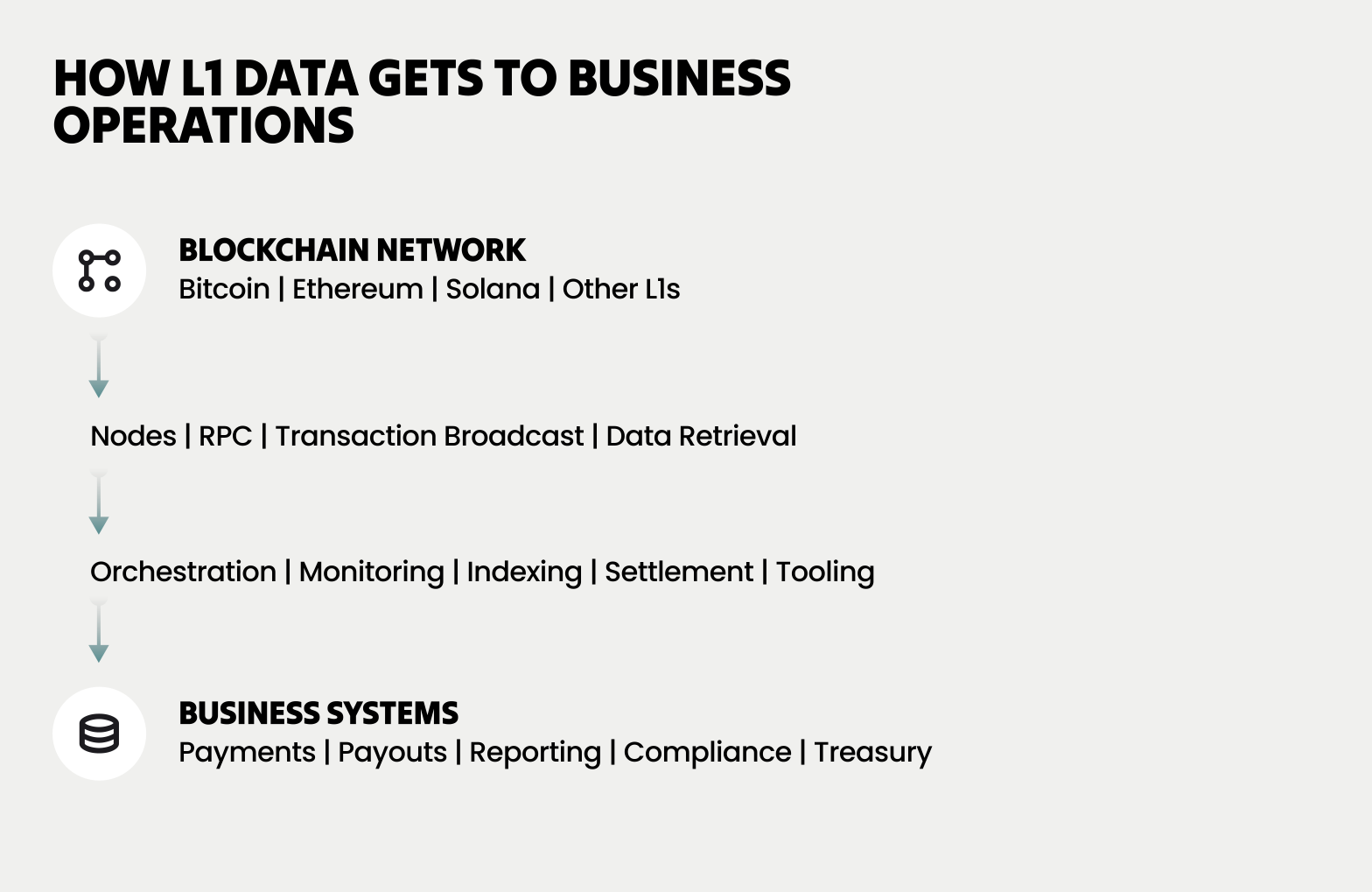
How infrastructure becomes a business product
Put simply, the upper infrastructure layer abstracts blockchain operations for business users. At this level, teams work with invoices, settlement balances, refunds, customer payment status, payouts, and reports. They do not work with mempools, RPC calls, and node logs.
This is where blockchain payment infrastructure becomes a business-facing fintech product.
- Finance teams work with payments, settlement balances, and transaction records.
- Compliance teams work with risk scoring, KYC, and AML policies.
- Support teams work with customer payment and withdrawal issues or refunds.
- Product teams work with API events, website integrations, and user experience.
- Operations teams handle payouts, monitoring, and reporting.
Coinspaid Enterprise is an example of an upper abstraction layer. It’s a ready-to-launch enterprise-level blockchain payment platform built on top of underlying infrastructure systems. The blockchain works at the base level while the infrastructure provides every team access to the functionality they’re looking for.
Why blockchain abstraction layers matter for business
Companies want business outcomes and complexity often stands in the way of achieving them. Most companies aren’t interested in becoming node operators. They want faster launch paths, lower costs, reliable payment flows, and clear compliance procedures.
| Business need | Raw L1 | Abstraction layer |
|---|---|---|
| Time to market | Long build cycles for each individual blockchain. | Clear integration path. |
| Infrastructure costs | Dedicated node, DevOps, and security work. | Shared sets of tools and processes. |
| Scalability | Separate growth plans for each network. | Multi-chain operations in one layer. |
| Compliance integration | Manual mapping between chain activity and policy. | Checks embedded in payment workflows. |
| Operational reliability | Custom monitoring and incident response. | Established support processes. |
| Reporting | Raw transaction data. | Business records for finance and audit work. |
| Customer experience | Flows for networks and wallets designed separately. | A unified user-facing payment flow. |
In traditional finance, businesses use gateways, dashboards, settlement systems, and reports — they don’t typically create their own payment processing services. Abstraction works the same in blockchain operations by packaging them into a form that a company can readily use.
What comes next for blockchain infrastructure?
The future of blockchain infrastructure is a cleaner split between chain-level and business-level tasks. Raw blockchain access will stay necessary. L1 networks provide settlement, execution, validation, and public transaction records.
The business value will keep moving into layers above L1: infrastructure, developer platforms, fintech abstraction, and business products.
The next stage of blockchain scalability infrastructure will focus on:
- More stable multi-chain operations
- Better real-time monitoring
- Stronger compliance data flows
- Clearer settlement logic
- Better stablecoin support
- More reliable payment orchestration
- Easier enterprise integration
L1 blockchain is the foundation. Business infrastructure turns L1 access into an operating layer that companies actively engage with to create more efficient payment systems.
FAQ
Raw blockchain access is direct technical access to a blockchain network. It usually works through nodes, RPC calls, transaction broadcasting, and data retrieval.
It lets a system read chain data and send signed transactions. It does not provide business workflows, customer payment screens, compliance checks, or accounting records.
Businesses rarely interact directly with blockchain networks. Raw access creates heavy operational work. A business has to manage nodes, monitoring, transaction retries, security, fee handling, chain upgrades, and reporting.
Infrastructure layers reduce that burden, so businesses use them for day-to-day operations.
L1 is the base blockchain network. It validates transactions, stores blocks, and reaches consensus. Infrastructure layers exist above L1. They add APIs, orchestration, monitoring, indexing, settlement logic, permissions, and business workflows.
L1 is the network. Business operates a few levels of abstraction above that.
To avoid running their own network nodes, per-chain integrations, transaction logic, and monitoring systems. A provider can connect several networks, standardize APIs, track transactions, support settlement, and offer operational tooling.
Infrastructure providers let businesses focus on payment flows, customers, finance, and risk controls.
Enterprise blockchain payment systems exist above blockchain infrastructure.
A customer sends crypto. The infrastructure detects the transaction, tracks confirmation status, maps it to the invoice, applies settlement logic, and creates records for the business.
Business users are concerned with the payment flow while the infrastructure handles blockchain operations behind it.