In short, blockchain cross-border payments are international transfers settled on a distributed ledger, typically with stablecoins as the value carrier. Funds move directly between digital wallets and typically settle in minutes, 24/7, at a fraction of the fees charged by traditional banks.
Cross-border payments run global commerce. The way they work has barely changed in decades.
A wire from Lisbon to São Paulo still passes through a chain of correspondent banks. Each one adds a fee, a delay, and less visibility along the way.
Blockchain offers another path: one shared ledger where value moves directly between two wallets in minutes, any day of the week.
Why Businesses Are Switching
The advantages are practical and measurable:
- Speed: settlement in seconds to minutes, with no weekend or holiday gap.
- Lower cost: fewer intermediaries, especially on less-common corridors.
- Predictability: settlement is final once confirmed, so there are no chargebacks or reversals.
- Reach: recipients can be paid in markets where local banking is limited or costly.
- Transparency: every transfer sits on a public ledger, which simplifies reconciliation and audit.
- Programmability: smart contracts enable conditional payments, automatic splits, and escrow.
- Capital efficiency: no need to pre-fund accounts in each currency; liquidity moves on demand.
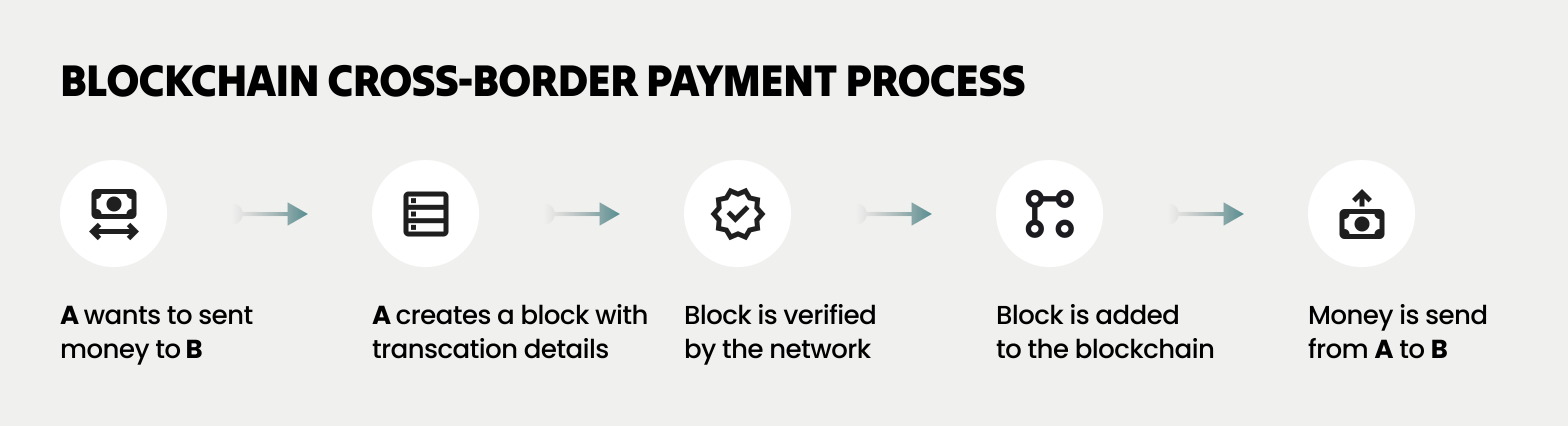
The workflow itself is simple:
- Fiat is converted to a stablecoin on the sender’s side.
- The stablecoin moves across a public blockchain, such as Ethereum or Solana.
- A local partner converts it into the recipient’s currency.
The blockchain is the settlement layer. A payment infrastructure provider handles the on- and off-ramps, compliance, and treasury work, so the business never touches the technical side.
Why Traditional Cross-Border Payments Need An Upgrade
Traditional international payments rely on correspondent banking. When two banks don’t hold accounts with each other, a third or fourth bank steps in. Each hop adds a fee, an FX margin, and a delay.
To be fair, SWIFT has improved. Most payments now reach the destination bank within an hour. But funds often sit at the receiving bank for review, and full delivery can still take one to five business days.
Data quality is another weak point. Per LexisNexis, up to half of failed or delayed international payments stem from simple errors, such as a wrong IBAN or BIC code.
Cost is just as uneven:
- The World Bank’s global average for sending a $200 remittance sits around 6%.
- B2B corridors can carry hidden costs of 2–7% once FX spreads and intermediary fees are added.
- Cut-off times limit when money moves. A Friday-afternoon payment may not start processing until Monday.
Blockchain addresses these limits at once. The shared ledger removes intermediaries, around-the-clock operation removes cut-offs, and permanent records facilitate reconciliation.
Traditional vs blockchain, at a glance
| Dimension | Traditional cross-border payment | Blockchain cross-border payment |
|---|---|---|
| Settlement time | 1–5 business days end-to-end | Seconds to minutes, depending on the network |
| Operating hours | Banking hours, weekdays only | 24/7/365, including holidays |
| Intermediaries | 1–4 correspondent banks per transfer | None on the settlement leg |
| Typical total cost | 2–7% (fees + FX spread) | Network fee + provider spread (often under 1% at scale) |
| Transparency | Limited visibility between hops | Public on-chain record; full traceability |
| Finality | Reversible until cleared; chargebacks are possible | Final on block confirmation |
| Currency model | Fiat only, through bank accounts | Fiat in, stablecoin transit, fiat out |
| Failure modes | Data errors, cut-offs, sanctions screening delays | Wrong-chain transfers, gas spikes, off-ramp liquidity |
How Blockchain Cross-Border Payments Work
A blockchain payment works in four layers.
- The blockchain network carries the value
It is a shared ledger maintained by many computers and secured by cryptography rather than a central authority. Public chains like Ethereum, Solana, Polygon, and Arbitrum do most of the work. Solana suits high-volume, low-value payments; Ethereum is favored for institutional flows and deep liquidity. - The stablecoin represents the value in transit
It is a digital token pegged 1:1 to a reserve currency — usually the US dollar, sometimes the euro — and backed by cash and short-term Treasuries. Stablecoins combine blockchain speed with the price stability of fiat. - Payment infrastructure connects the chain to the banking system
This covers wallets, fiat on- and off-ramps, FX, custody, compliance, and APIs. Most businesses never touch a blockchain. They send a payout in USD or EUR, and the provider handles the rest. - Settlement and conversion complete the transfer
Settlement is the moment a transaction becomes final on-chain. Conversion is when the recipient’s partner swaps the stablecoin for local currency and sends it to a bank account.On-chain finality takes 12–15 minutes on Ethereum and a few seconds on Solana. Local delivery then runs through systems like SEPA Instant in Europe, FedNow in the US, PIX in Brazil, and UPI in India. In practice, the slowest part is usually that off-ramp into the local bank, not the blockchain — and where the recipient holds stablecoins directly, the whole transfer finishes in under a minute.
The Role of Stablecoins in Cross-Border Payments
Stablecoins do two jobs. They remove the volatility that kept crypto out of business payments, and they act as a neutral asset between two fiat currencies.
A USD-to-MXN transfer no longer needs a dollar account in a Mexican bank or a peso account in a US bank. The stablecoin sits between them as a transit currency, often called the “stablecoin sandwich.”
In Q1 2026, stablecoin transaction volume was 4.3 times higher than Visa’s, and 49.5 times higher than PayPal’s.
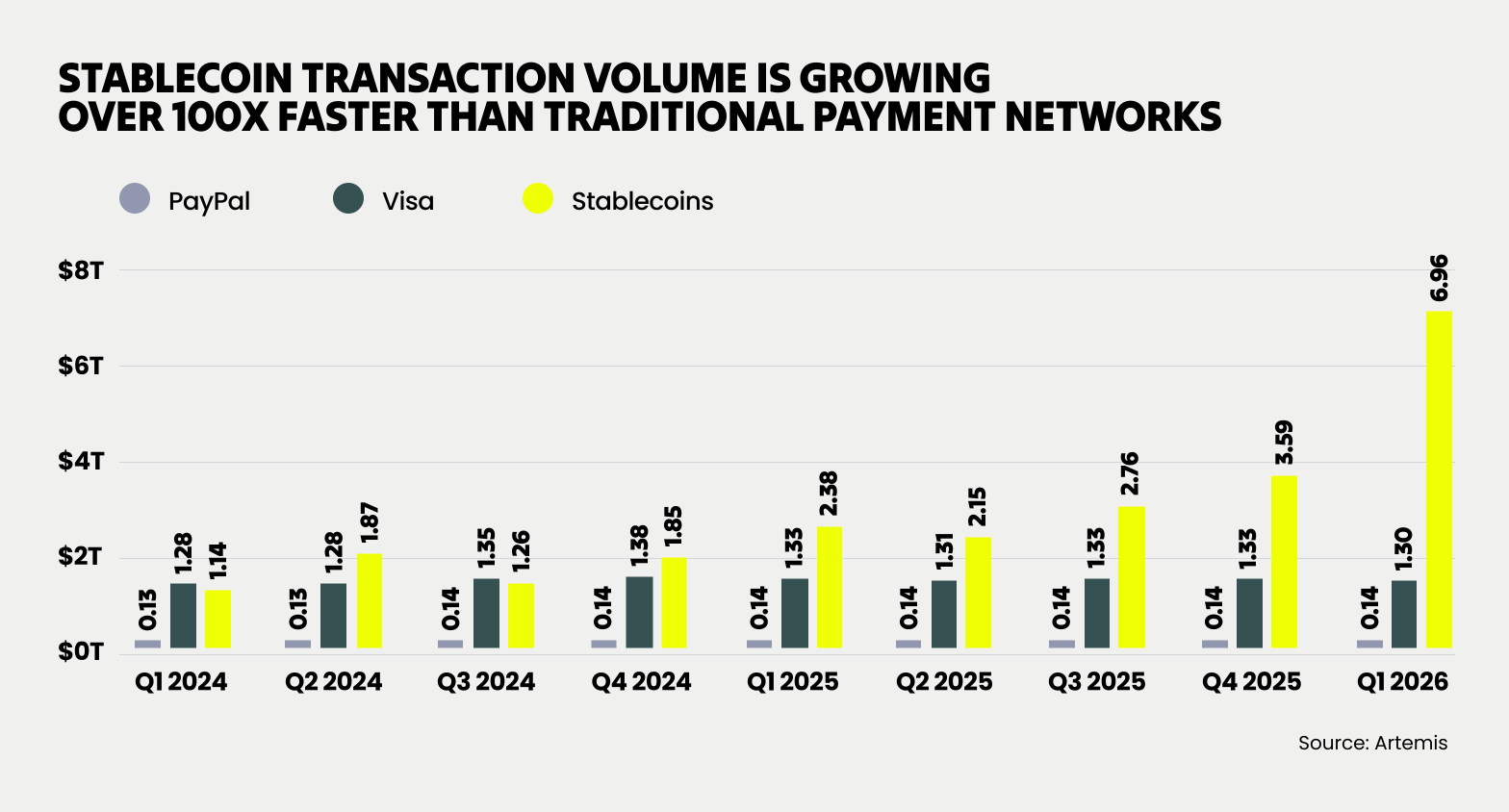
Adoption has moved well beyond crypto-native firms:
- McKinsey and Artemis Analytics estimate real-economy stablecoin payments reached about $390 billion in 2025.
- B2B payments alone grew more than sevenfold year over year.
- Visa settles card transactions in USDC across a growing partner network.
Regulation matured in 2025–2026:
- The US GENIUS Act (July 2025) created a federal regime for payment stablecoin issuers, requiring 1:1 reserves, monthly attestations, and licensed issuance.
- In the EU, MiCA’s stablecoin rules are fully active, with an authorization deadline of 1 July 2026.
- Hong Kong, Singapore, and the UK have added their own frameworks.
Stablecoins Commonly Used in B2B Flows
| Stablecoin | Issuer | Regulatory status | Primary chains in payments use |
|---|---|---|---|
| USDC | Circle | MiCA-authorised in the EU; aligned with GENIUS Act | Ethereum, Solana, Base, Polygon, Arbitrum |
| USDT | Tether | Outside MiCA; widely used in non-EU markets | Tron, Ethereum, Solana |
| PYUSD | Paxos / PayPal | NYDFS-regulated; expanding institutional use | Ethereum, Solana |
| RLUSD | Ripple | NYDFS-regulated; growing B2B adoption | Ethereum, XRP Ledger |
| EURC | Circle | MiCA-authorized; main EUR-denominated option | Ethereum, Solana, Stellar |
Infrastructure and Scalability
The blockchain is only one piece. Several layers around it decide whether a payment is fast, compliant, and reliable at volume.
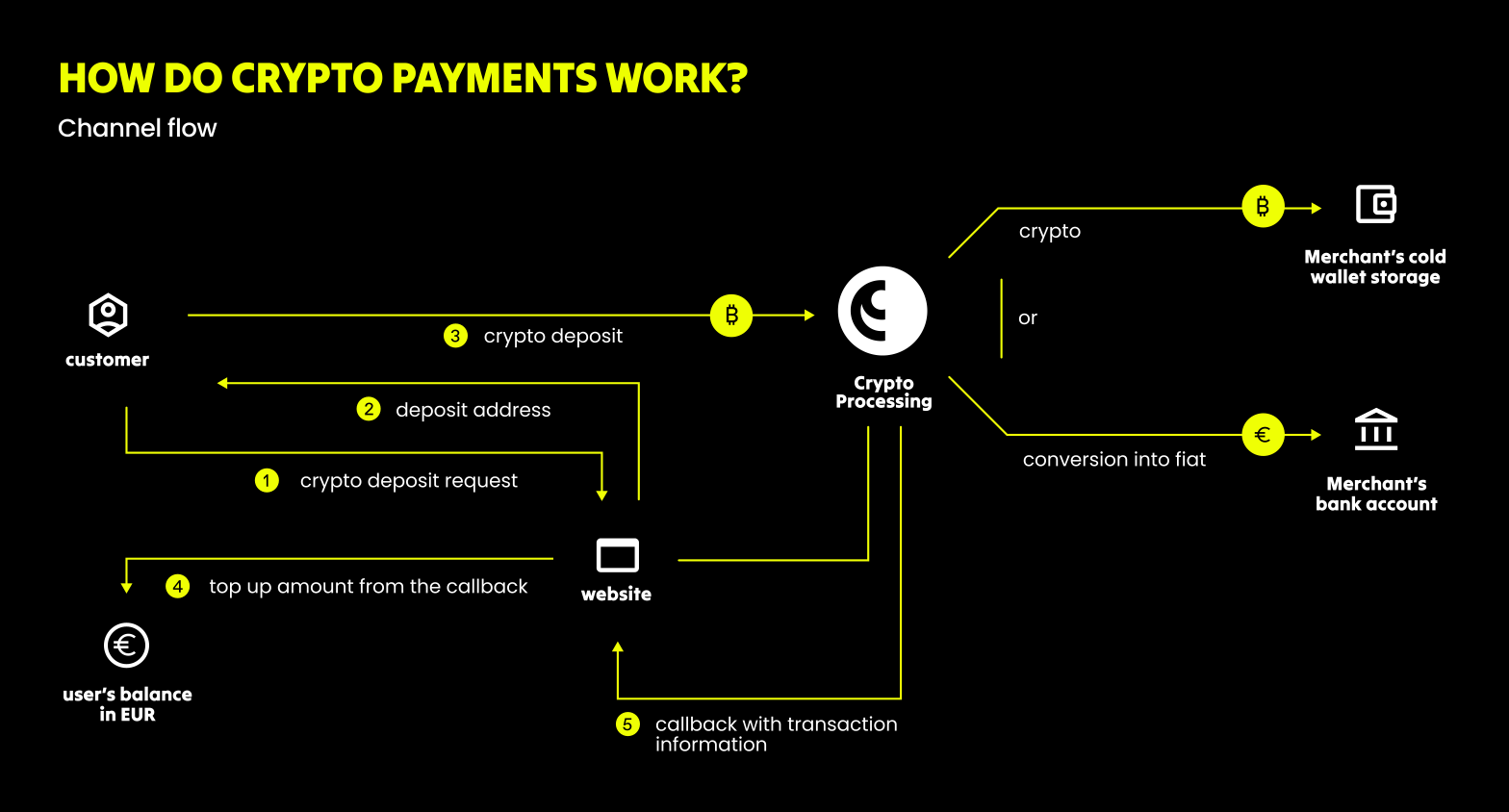
- Infrastructure layer: wallets, on- and off-ramps, FX, custody, and KYC/AML. Providers deliver it through APIs and white-label integrations, so a business can send “a payment in USD” without holding crypto.
- Orchestration: routing logic that picks the chain, stablecoin, liquidity pool, and off-ramp for each transfer, balancing cost, speed, and reliability.
- Interoperability: moving value between chains and into banking systems. The same token isn’t natively identical across chains, so bridges and messaging protocols handle the chain-to-chain step.
- Scalability: high-throughput chains solved raw speed; the harder problem is operational consistency across providers and regions.
- Liquidity management: making sure the right currency is ready in the right place, so payouts in less-common corridors settle at a predictable rate.
Infrastructure providers are regulated companies that run this whole stack, sitting between banks and public blockchains, so businesses don’t have to. One example is Coinspaid, an Estonia-licensed crypto payment infrastructure provider for business customers. Its platform covers crypto and fiat on- and off-ramps, multi-currency wallets, automated FX, and integrations with major blockchains and stablecoins. Comparable providers include Fireblocks, BVNK, Circle, and Bitstamp’s business arm.
Compliance and Security
Blockchain transparency is sometimes mistaken for a lack of compliance. The opposite is true. Because every transfer is recorded publicly and permanently, well-run providers can screen, monitor, and report at least as well as traditional banks.
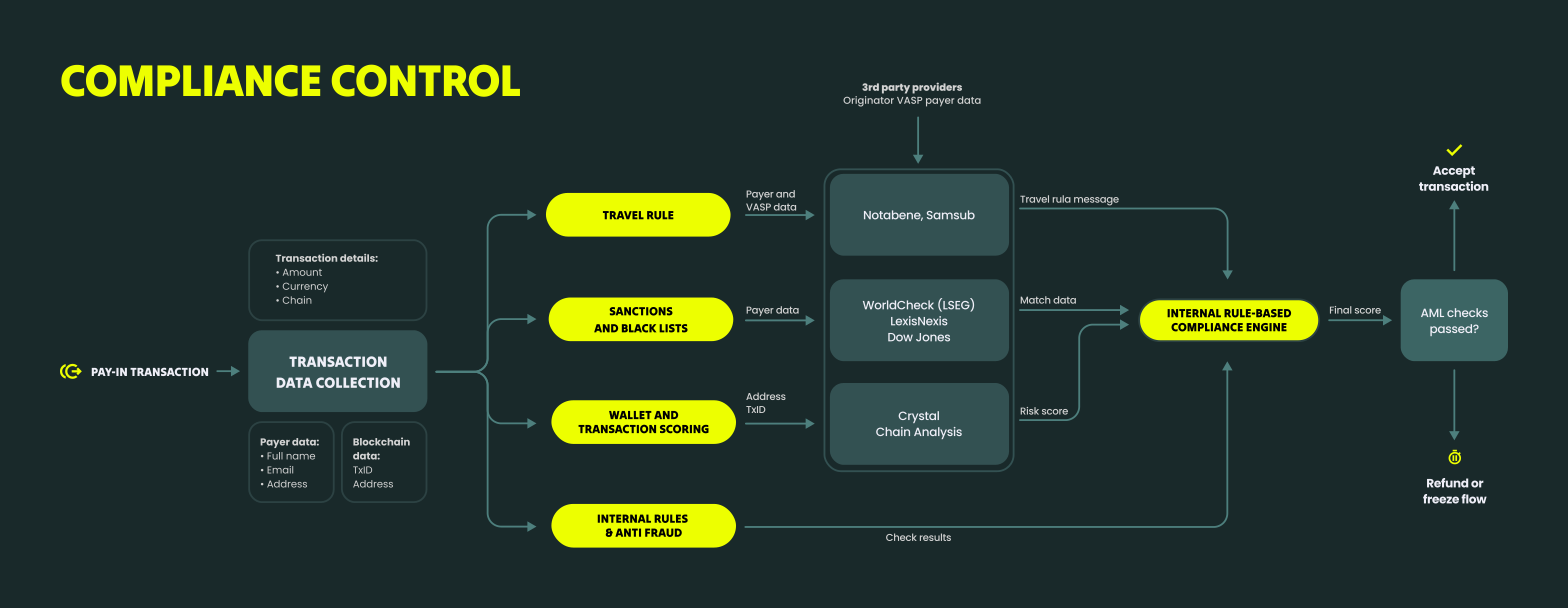
At the on- and off-ramp, regulated providers:
- Run full KYC for individuals and KYB for businesses.
- Screen counterparties against sanctions lists.
- Apply the FATF Travel Rule above local thresholds.
On-chain, analytics tools like Chainalysis, TRM Labs, and Elliptic score wallet addresses in real time, flagging exposure to mixers, sanctioned entities, and suspicious patterns. Smart-contract and custody risks are managed through audited code, multi-signature wallets, and insured custody.
The rules are tighter than two years ago. MiCA, the GENIUS Act, and Singapore’s Payment Services Act all require licensed issuance, reserve transparency, and consumer protection. For a business, a compliant provider now offers clearer footing than informal stablecoin use ever did.
Real-World Use Cases
- B2B supplier payments: paying suppliers across Latin America, Africa, and Southeast Asia, where banking is slow or costly.
- Remittances: corridors like US–Mexico and Europe–West Africa, where lower fees reach end recipients directly.
- Payroll and contractors: platforms like Deel and Remote pay contractors in dozens of countries. One of the fastest-growing categories.
- Fintech and PSPs: providers settle merchant flows and rebalance treasury between regions in the background.
- Marketplaces: cross-border platforms pay sellers in near real time instead of waiting for weekly payouts.
- Treasury transfers: multinationals move working capital between subsidiaries on demand.
Challenges That Remain
The technology has matured, but significant challenges remain.
- Regulatory fragmentation: rules still differ across the EU, US, UK, Singapore, and Hong Kong. Operating across borders means juggling multiple licenses.
- Liquidity gaps: less-common currency pairs are thinner on-chain, which can widen spreads.
- Cross-chain risk: bridges have improved but remain a security-sensitive area.
- Scale under load: fee predictability during congestion is still uneven across networks.
- Conservative adoption: finance teams and auditors move slowly, and accounting standards for digital assets are still maturing.
- Operational risk: wrong-chain transfers and address typos still happen and need dedicated controls.
The Future of Cross-Border Payments
Several trends are converging in 2026:
- Bank money meets on-chain money. Tokenized deposits and money-market funds are starting to share infrastructure with stablecoins.
- Central banks are active. The Bank for International Settlements estimates that around 90% of central banks are working on a digital currency. Wholesale CBDCs will likely connect with private stablecoins rather than replace them.
- Infrastructure is converging. SWIFT is piloting links to tokenized assets. J.P. Morgan’s Kinexys settles billions a day on a permissioned chain. Visa, Mastercard, and PayPal all run stablecoin settlement.
- AI is moving in. Orchestration engines use machine learning to choose routes, predict liquidity, and flag unusual transfers.
It is likely that instead of a wholesale replacement of SWIFT, we will get some sort of hybrid. That would include traditional infrastructure for high-value bank-to-bank flows, blockchain for fast and programmable payments, and orchestration that routes each payment to whichever fits best.
FAQ
Yes, when used through regulated infrastructure. Licensed providers add KYC, AML, sanctions screening, and insured custody on top of the chain. The main risks are operational, such as wrong-address transfers, off-ramp failures, bridge issues. They can all be managed through provider controls.
They carry the value, removing price volatility and acting as a neutral transit currency between two fiat sides. USDC leads in regulated B2B use, with PYUSD, RLUSD, and euro-pegged EURC expanding under MiCA and the GENIUS Act.
The on-chain leg settles in seconds to a few minutes: for example, it takes seconds on Solana, and 12–15 minutes on Ethereum. End-to-end, including the fiat off-ramp, most payments arrive within minutes to a few hours, versus one to five business days through correspondent banking.
Components such as wallets, on- and off-ramps, FX, custody, compliance, orchestration, and APIs connect a business’s systems to public blockchains. Providers run this layer so businesses never manage keys or hold crypto.
Yes, and more do every year. Common uses include supplier payments, payroll, marketplace settlement, treasury, and remittances — all through a regulated provider, in the business’s preferred currency.
By removing correspondent banks, cutting most FX intermediation, and running around the clock, so there is no need to pre-fund accounts in each currency. Total cost typically drops from 2–7% to a network fee plus a provider spread, often around 1% at scale.