Blockchain transaction monitoring is the process of tracking digital asset payments across blockchain networks, checking their status, and assessing related risks. Businesses use it to confirm payments, support accounting, detect suspicious activity, and meet compliance requirements.
In practice, blockchain payments are monitored through wallet tracking, blockchain data analysis, payment matching, risk scoring, alerts, and AML checks. A strong monitoring process gives finance, compliance, and operations teams a real-time view of payment activity.
How Crypto Payment Monitoring Works
Crypto payment monitoring starts with blockchain data. The system checks whether funds arrived, whether the payment has enough confirmations, whether the wallet creates risk, and whether the transaction matches the invoice.
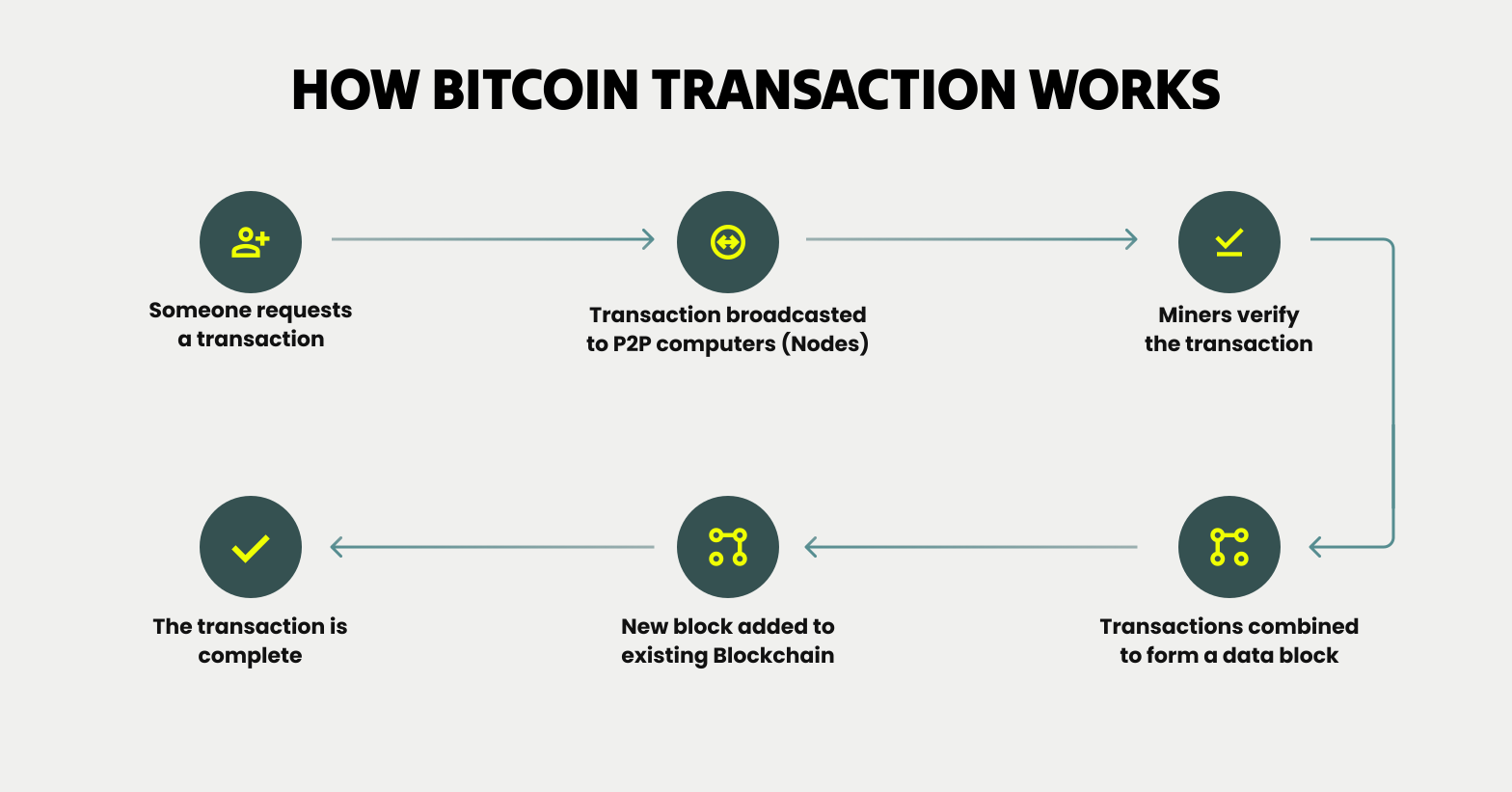
Blockchain Data Tracking
Every blockchain transaction creates a public record. This record usually includes the transaction hash, wallet addresses, asset type, amount, timestamp, block number, network fee, and confirmation status.
Businesses can track this data through blockchain nodes, explorers, indexers, APIs, or crypto payment providers. Nodes provide access to raw blockchain data. Indexers organize this data into searchable formats. Payment teams need answers such as whether a deposit arrived, how many confirmations it has, and which invoice it belongs to.
Wallet and Transaction Analysis
Wallet analysis reviews the address involved in a payment and its activity history. This can include previous transfers, connected wallets, exchange exposure, bridge activity, mixer exposure, scam links, stolen funds, sanctioned entities, and other high-risk categories.
Transaction analysis checks the payment itself. A business may review whether the amount matches the invoice, whether the customer used the correct asset and network, whether the payment was underpaid or overpaid, and whether the funds came from a risky wallet.
Real-Time Monitoring Systems
Real-time blockchain transaction monitoring helps businesses act while the payment is still relevant for operations. An online merchant, for example, needs to know whether to release an order, hold it for review, or ask the customer to resend funds on the correct network.
A typical crypto payment lifecycle looks like this.
- Invoice created
- Wallet address assigned
- Transaction broadcast
- Mempool detection
- Block confirmation
- Risk scoring
- Payment matched
- Settlement or conversion
- Reconciliation
- Ongoing monitoring
This flow connects blockchain payment tracking with business decisions. A transaction hash confirms activity on-chain. A monitoring system tells the business whether the payment is complete, safe, compliant, and ready for settlement.
Risk Scoring and Alerts
Risk scoring assigns a risk level to a transaction, wallet, or payment flow. The score may be based on wallet history, fund source, transaction size, asset type, known illicit activity, sanctions exposure, and behavior patterns.
Alerts help teams respond quickly. A low-risk payment may be processed automatically. A medium-risk payment may require manual review. A high-risk payment may be paused, escalated, reported, or rejected according to company policy and legal requirements.
AML and Compliance Checks
AML monitoring for crypto payments connects blockchain data with financial crime controls. The goal is to detect activity linked to money laundering, sanctions evasion, terrorist financing, fraud, scams, and stolen funds.
AML checks may include wallet screening, transaction risk scoring, sanctions screening, KYT, customer risk profiling, enhanced due diligence, and suspicious activity reporting.
For businesses, AML monitoring needs documentation. Each alert should have a reason, review result, decision, and audit record. This supports banking reviews, partner checks, regulator requests, and internal audits.
What Businesses Monitor in Blockchain Transactions
Businesses monitor more than payment arrival. The main checks include:
- Payment status;
- Confirmation count;
- Sending and receiving addresses;
- Asset type;
- Network;
- Transaction amount;
- Timing;
- Wallet risk;
- Refund needs;
- Conversion status;
- Reconciliation data.
However, it isn’t a single team that does the checking:
- Payment teams focus on whether the transaction can be credited;
- Compliance teams focus on risk;
- Finance teams focus on settlement, accounting, and reporting;
- Security teams focus on unusual wallet activity, unauthorized withdrawals, compromised accounts, and abnormal transaction patterns.
For example, a merchant accepting USDT on Tron needs to know whether the customer sent the correct token through the correct network. A payment sent through the wrong chain may require support intervention. A payment from a wallet linked to illicit exposure may require compliance review before the order is released.
Tools for Blockchain Transaction Monitoring
The main tools for blockchain transaction monitoring include blockchain explorers, wallet dashboards, payment gateways, blockchain analytics platforms, KYT tools, internal risk engines, and accounting integrations.
Blockchain explorers such as Etherscan, Tronscan, and Blockchain.com help with manual blockchain payment tracking. They show transaction hashes, wallet addresses, block confirmations, token transfers, and basic payment status.
Blockchain analytics platforms provide deeper risk intelligence. Common examples include Chainalysis, TRM Labs, and Elliptic. These services help businesses assess wallet exposure, trace funds, review transaction risk, and support compliance workflows.
Payment providers combine tracking, merchant operations, wallet controls, and risk checks. CoinsPaid, for example, supports crypto payment processing with transaction status tracking, KYT checks, reporting, wallet management, and settlement tools. In this setup, monitoring is part of the payment workflow rather than a separate manual task.
It isn’t easy to monitor crypto payments, which is why blockchain payment solutions, such as Coinspaid, are usually implemented.
- Transaction speed is one challenge. Some payments arrive quickly, while confirmation times vary by blockchain, fee level, and network congestion. Businesses need rules for how many confirmations are enough before crediting a payment.
- Multiple blockchains add complexity. Bitcoin, Ethereum, Tron, BNB Chain, Litecoin, and stablecoin networks use different transaction formats, fee models, and confirmation logic. A monitoring system needs chain-specific handling.
- High payment volume also creates pressure. A small business may review some payments manually. A high-volume merchant needs automated payment matching, risk scoring, alert routing, and reconciliation.
- False positives require careful handling. Monitoring systems may flag activity with a legitimate explanation. Strict rules can delay normal customers. Weak rules can expose the company to fraud and compliance failures.
- Regulatory complexity adds another challenge. AML, sanctions, Travel Rule, reporting, and recordkeeping requirements vary by jurisdiction. Businesses should define internal policies before launch and review them as payment volumes grow.
The Role of the Technical Base in Monitoring
The quality of crypto payment monitoring depends on the technical base behind it. A business needs stable node access, accurate indexing, reliable APIs, event monitoring, webhook delivery, wallet controls, risk tools, and reporting.
For payment operations, this technical base must connect blockchain events with business systems. It needs to match deposits to invoices, update payment statuses, trigger notifications, apply risk rules, convert funds when required, and create records for reconciliation.
Payment providers such as Coinspaid connect blockchain payment processing with operational tools for transaction tracking, risk checks, reporting, wallet management, and settlement support. This helps businesses reduce manual work while keeping payment activity traceable and ready for review.
The Future of Blockchain Transaction Monitoring
Blockchain transaction monitoring is becoming faster, more automated, and more connected across networks. Businesses need systems able to follow funds across bridges, stablecoins, exchanges, smart contracts, and wallets.
AI-driven monitoring will help teams review alerts, detect unusual behavior, identify related wallets, and prioritize cases. This can reduce manual review for high-volume payment operations. Human review will remain important for policy decisions, regulatory judgment, and complex investigations.
The next stage of crypto payment monitoring will combine real-time blockchain analytics, stronger identity checks, better cross-chain tracing, and cleaner reporting for banks, auditors, and regulators.
FAQ – Monitoring Blockchain Transactions
Businesses monitor crypto payments by tracking blockchain transactions, matching payments to invoices, checking confirmation status, analyzing wallet risk, and recording the result in payment, accounting, and compliance systems. High-volume businesses usually use payment providers, blockchain analytics tools, APIs, and automated alerts.
AML in crypto payments uses customer checks, wallet screening, transaction monitoring, KYT, sanctions screening, risk scoring, and alert review. When a transaction is linked to high-risk activity, the business may pause it, request more information, escalate the case, reject the transaction, or report suspicious activity where required.
Common tools include blockchain explorers, wallet dashboards, payment gateways, KYT systems, blockchain analytics platforms, internal risk engines, webhook systems, and accounting tools. Chainalysis, TRM Labs, and Elliptic are widely used examples of blockchain analytics and crypto transaction monitoring providers.
Transaction monitoring helps businesses confirm payments, prevent fraud, detect high-risk activity, support AML obligations, protect customer trust, and maintain accurate records. It also helps finance teams reconcile crypto payments with invoices, settlements, refunds, and accounting reports.
AI-driven monitoring uses machine learning and automated analysis to detect unusual transaction behavior, prioritize alerts, identify wallet clusters, and support compliance investigations. It works best with reliable blockchain data, company rules, and human review for higher-risk cases.