Blockchain infrastructure is the technical foundation behind digital asset products, blockchain payments, wallets, settlement systems, and Web3 applications.
Modern blockchain infrastructure consists of multiple abstraction layers. These layers turn raw blockchain networks into usable business solutions.
A blockchain protocol can execute transactions. Business-ready infrastructure helps companies accept payments, manage assets, automate compliance, settle funds, and connect blockchain activity to real financial workflows.
Most businesses interact with the upper layers of blockchain architecture. They use platforms, APIs, payment systems, and ready-to-launch products instead of managing nodes, validators, mempools, or raw transaction execution.
Why is blockchain infrastructure presented as a multi-layered structure?
Blockchain infrastructure is presented in layers because each layer solves a different problem.
The lower layers provide access to blockchain networks. The middle layers make blockchain usable for developers and financial systems.
The upper layers turn blockchain functions into products for businesses and end users.
This layered model helps explain how blockchain infrastructure works in real use cases.
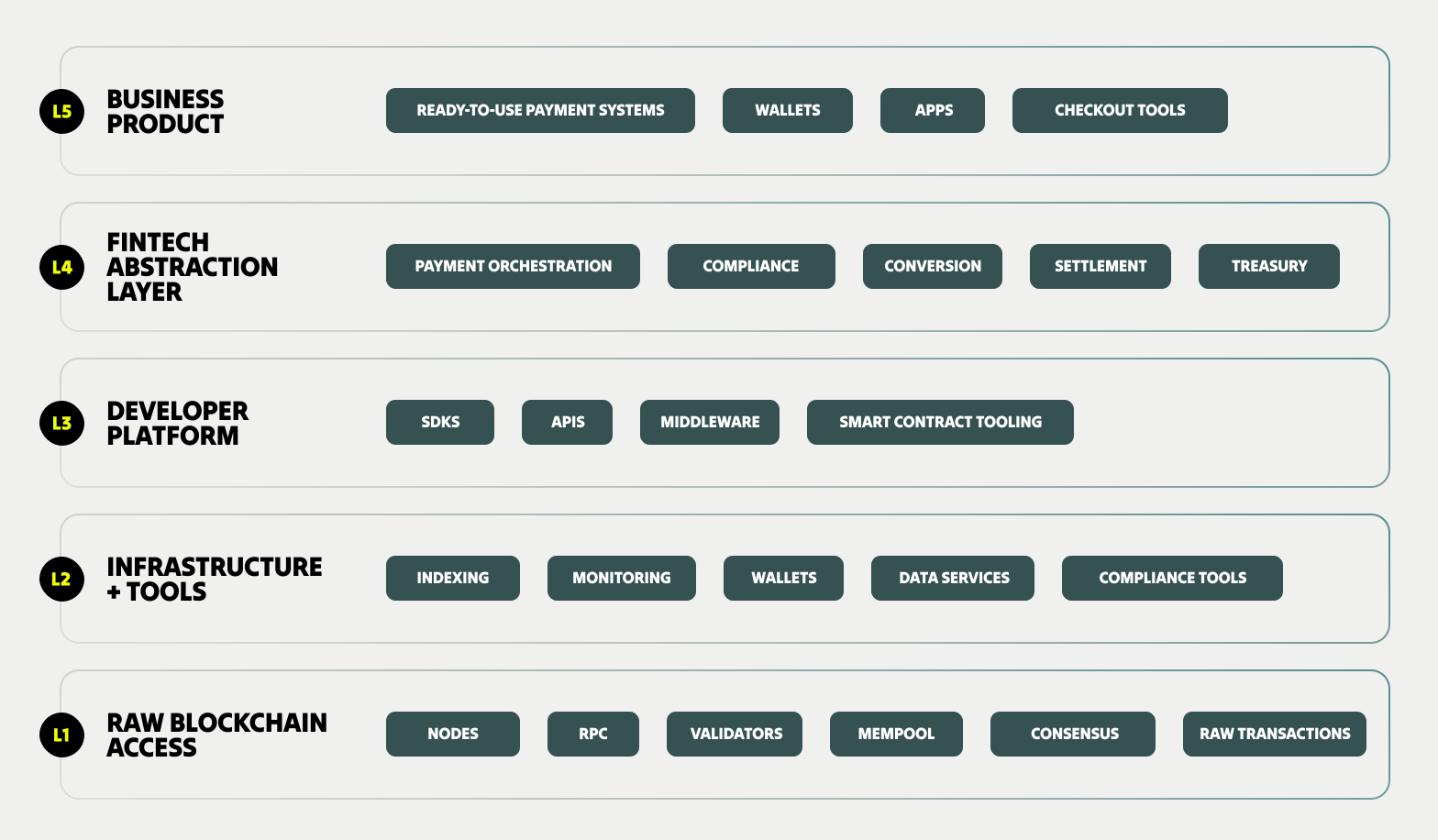
Each layer reduces complexity for the next one.
A business usually needs L4 or L5. A developer may need L2 or L3. A blockchain infrastructure provider may operate across several layers.
The 5 layers of modern blockchain infrastructure
L1 – Raw blockchain access
Raw blockchain access is the lowest layer of the blockchain infrastructure stack.
It provides direct access to blockchain networks. This layer includes the core systems required to read, validate, and execute blockchain transactions.
What this layer includes:
| Component | What it does |
|---|---|
| Nodes | Connect to a blockchain network and store network data |
| RPC access | Allows systems to send requests to blockchain nodes |
| Mempool | Holds pending transactions before confirmation |
| Validators | Confirm transactions and help secure the network |
| Consensus mechanisms | Define how the network agrees on valid transactions |
| Blockchain data | Provides raw transaction, wallet, and block information |
| Raw transaction execution | Sends transactions directly to the blockchain |
Purpose of L1
L1 gives direct access to blockchain networks.
It is essential for blockchain operation, but it is technical. It requires engineering knowledge, monitoring, maintenance, and security controls.
Business relevance of L1
Raw blockchain access gives businesses low-level control. It also creates high operational complexity.
A company using L1 directly must manage node reliability, transaction failures, confirmation times, wallet security, data parsing, and network-specific logic.
For most businesses, L1 is too technical for daily financial operations.
Why L2?
L2 exists because raw blockchain access needs tools around it.
Businesses and developers need indexing, monitoring, APIs, alerts, wallets, and compliance systems before blockchain data becomes operationally useful.
L2 – Infrastructure and tools
Infrastructure and tools are the operational layer of blockchain infrastructure.
This layer makes blockchain networks easier to monitor, query, manage, and use.
What this layer includes:
| Tool type | Business function |
|---|---|
| Indexing | Converts raw blockchain data into searchable records |
| APIs | Connect business systems to blockchain functions |
| Monitoring | Tracks transactions, nodes, wallets, and network activity |
| Wallet tools | Helps generate, manage, and secure wallets |
| Compliance tooling | Supports risk checks and transaction screening |
| Blockchain data services | Provides clean data for analytics and reporting |
Purpose of L2
L2 makes blockchain usable in daily operations.
Instead of reading raw blockchain data manually, teams can use tools, dashboards, alerts, and APIs.
Business relevance of L2
Infrastructure providers simplify blockchain operations.
They reduce the need for companies to build every technical component internally. They also help teams monitor payments, detect issues,
and connect blockchain data to internal systems.
A business still needs technical resources at this level. L2 gives tools, but it does not deliver a complete financial product.
Why L3?
L3 exists because developers need more than operational tools.
They need a developer platform with SDKs, middleware, smart contract tooling, payment APIs, and orchestration systems.
L3 – Developer platform
A developer platform is the layer where blockchain functions become easier to build into products.
This layer abstracts blockchain complexity for developers.
What this layer includes:
| Component | What it helps developers do |
|---|---|
| SDKs | Add blockchain functions with pre-built libraries |
| Middleware | Connect apps, blockchains, and internal systems |
| Payment APIs | Create blockchain payment flows |
| Smart contract tooling | Build, deploy, and interact with smart contracts |
| Orchestration systems | Coordinate transactions, wallets, networks, and services |
Purpose of L3
L3 helps developers build blockchain products without managing raw infrastructure.
It provides reusable components for payments, wallets, transaction logic, smart contracts, and blockchain connectivity.
Business relevance of L3
Developer platforms reduce build time.
A company can create blockchain-enabled services faster because developers work with APIs and tools instead of low-level network mechanics.
This level is useful for companies building their own digital asset products. It still requires product, engineering, compliance, and security resources.
Why L4?
L4 exists because financial operations need more than developer tools.
Businesses need payment orchestration, compliance automation, conversion, settlement, treasury functions, and embedded financial services.
L4 – Fintech abstraction layer
The fintech abstraction layer is the level where blockchain infrastructure becomes usable for financial operations.
This layer hides blockchain mechanics behind familiar financial workflows.
What this layer includes:
| Function | What it does |
|---|---|
| Payment orchestration | Routes and manages payment flows across assets and networks |
| Compliance automation | Applies checks, rules, and monitoring to digital asset activity |
| Fiat to crypto conversion | Connects traditional currencies with digital assets |
| Crypto to fiat conversion | Allows companies to settle blockchain payments in fiat |
| Stablecoin settlement | Supports settlement through stable digital assets |
| Treasury infrastructure | Helps manage balances, withdrawals, reporting, and asset flows |
| Embedded financial services | Adds blockchain payment features inside existing business products |
Purpose of L4
L4 turns blockchain activity into financial workflows.
A company can accept payments, process settlements, manage digital assets, and handle reporting without interacting with the blockchain at a technical level.
Business relevance of L4
Companies interact with financial operations instead of blockchain mechanics.
This is especially important for businesses using blockchain payment infrastructure. They need reliability, compliance controls, reporting, conversion, settlement, and security.
Infrastructure-focused providers such as Coinspaid operate within this fintech abstraction layer. Coinspaid provides blockchain payment infrastructure for businesses handling digital asset operations.
Coinspaid Core supports scalable blockchain infrastructure for digital assets. It helps businesses work with payments, wallets, processing, and transaction flows at an operational level.
Why L5?
L5 exists because many companies want a ready-to-use solution.
They need a business product with finished workflows, user interfaces, payment tools, and operational support.
L5 – Business product
A business product is the end-solution layer of modern blockchain infrastructure.
At this level, blockchain becomes a ready-to-use operational system for companies and end users.
What this layer includes:
| Product type | Example use case |
|---|---|
| Wallets | Store, send, and receive digital assets |
| Payment apps | Accept or send blockchain payments |
| Neobanks | Offer digital asset functions inside financial accounts |
| Embedded finance products | Add crypto payment features inside existing platforms |
| Cross-border payment systems | Move value across markets using digital assets |
| Checkout systems | Let customers pay with crypto at checkout |
Purpose of L5
L5 packages blockchain infrastructure into a business-ready product.
The end user may use a checkout page, payment app, wallet, or dashboard without seeing the underlying blockchain infrastructure.
Business relevance of L5
This is where businesses consume ready-to-use infrastructure.
At the business-product layer, blockchain infrastructure becomes a complete operational solution for companies accepting, sending, or managing digital assets.
Coinspaid Enterprise fits this level. It is a ready-to-launch enterprise-level blockchain payment platform for companies seeking digital asset payment capabilities without building the full system internally.
L5 is usually the best fit for businesses focused on speed, reliability, compliance, and operational simplicity.
Layer comparison table
| Layer | Main user | Main purpose | Technical complexity | Business use |
|---|---|---|---|---|
| L1 Raw blockchain access | Protocol teams, node operators | Access blockchain networks directly | Very high | Low-level network access |
| L2 Infrastructure and tools | Infrastructure teams | Make blockchain data and operations usable | High | Monitoring, data, wallet, and compliance tools |
| L3 Developer platform | Developers | Build blockchain products faster | Medium to high | APIs, SDKs, middleware, payment tools |
| L4 Fintech abstraction layer | Financial platforms and businesses | Turn blockchain into financial workflows | Medium | Payments, conversion, settlement, compliance |
| L5 Business product | Businesses and end users | Use finished blockchain-based solutions | Low | Checkout, payment apps, wallets, enterprise platforms |
Which blockchain infrastructure level is best for a business?
Most businesses need L4 or L5 blockchain infrastructure.
Raw blockchain access gives control, but it also adds technical work. A business needs engineers, security processes, monitoring systems, compliance tools, wallet controls, and ongoing infrastructure management.
For companies accepting or sending digital assets, the priority is reliable financial operations.
They need payments to work. They need funds to settle. They need records for finance teams. They need compliance workflows. They need security controls. They need fast deployment.
| Business need | Best-fit layer |
|---|---|
| Running blockchain nodes | L1 |
| Monitoring transactions and wallets | L2 |
| Building custom blockchain apps | L3 |
| Managing payment flows and settlement | L4 |
| Launching a ready-to-use crypto payment solution | L5 |
A business should choose a lower layer when it wants control and has strong internal technical resources.
A business should choose an upper layer when it wants faster time to market, simpler operations, and a finished payment or digital asset product.
For most companies, blockchain payment infrastructure is most useful when it works through abstraction. The company gets payment, settlement, reporting, and treasury workflows. The provider handles the blockchain complexity underneath.
Summary
Modern blockchain infrastructure is built in layers.
L1 gives raw blockchain access. L2 adds infrastructure and operational tools. L3 gives developers platforms for building products. L4 turns blockchain into financial workflows. L5 delivers finished business products.
This layered model explains how blockchain infrastructure works in real business settings.
Most companies interact with the upper layers because they need reliable operations, not raw blockchain mechanics. For businesses accepting, sending, or managing digital assets, L4 and L5 provide the clearest path to blockchain adoption.
FAQ
Raw blockchain access is direct access to a blockchain network.
It includes nodes, RPC access, mempool data, validators, consensus mechanisms, blockchain data, and raw transaction execution.
This layer gives technical access to blockchain networks, but it requires infrastructure management and engineering expertise.
Blockchain payment infrastructure is the system that helps businesses accept, process, manage, convert, and settle digital asset payments.
It connects blockchain networks with business payment workflows.
Blockchain payment infrastructure can include wallets, payment APIs, compliance checks, transaction monitoring, conversion tools, settlement systems, and reporting.
The fintech abstraction layer is the part of blockchain infrastructure that turns blockchain mechanics into financial workflows.
It includes payment orchestration, compliance automation, fiat-to-crypto conversion, stablecoin settlement, treasury tools, and embedded financial services.
This layer helps companies use blockchain payments without managing blockchain operations directly.
Businesses usually avoid raw blockchain access because it creates technical and operational complexity.
Direct blockchain use requires node management, transaction monitoring, wallet security, compliance checks, reporting, asset handling, and network-specific expertise.
Most businesses need payment and settlement workflows. They prefer platforms that handle the underlying blockchain operations.
Blockchain businesses abstract complexity through APIs, dashboards, payment platforms, wallet systems, compliance tools, orchestration engines, and settlement services.
These systems hide low-level blockchain mechanics.
The business sees payment statuses, balances, reports, withdrawals, invoices, and settlement options. The provider manages the blockchain logic underneath.
Infrastructure providers connect blockchain networks with real business use cases.
They help companies access blockchain functions through tools, APIs, platforms, and ready-to-use products.
Their role is to reduce technical workload, improve reliability, support compliance workflows, and help businesses launch digital asset services faster.