Understanding the L2 layer of blockchain systems
Blockchain infrastructure is the second layer of the blockchain stack that provides operational tools and services that make blockchain networks usable for businesses and developers.
While L1 gives raw blockchain access, L2 carries that access into nodes, APIs, monitoring, wallets, orchestration, compliance checks, and data services. Businesses rely on blockchain infrastructure providers to make various networks with unique challenges accessible for day-to-day work.
Why blockchain infrastructure is considered L2
Blockchain infrastructure is built on top of the network itself and serves as a foundation for developer platforms, fintech abstraction, and business products.
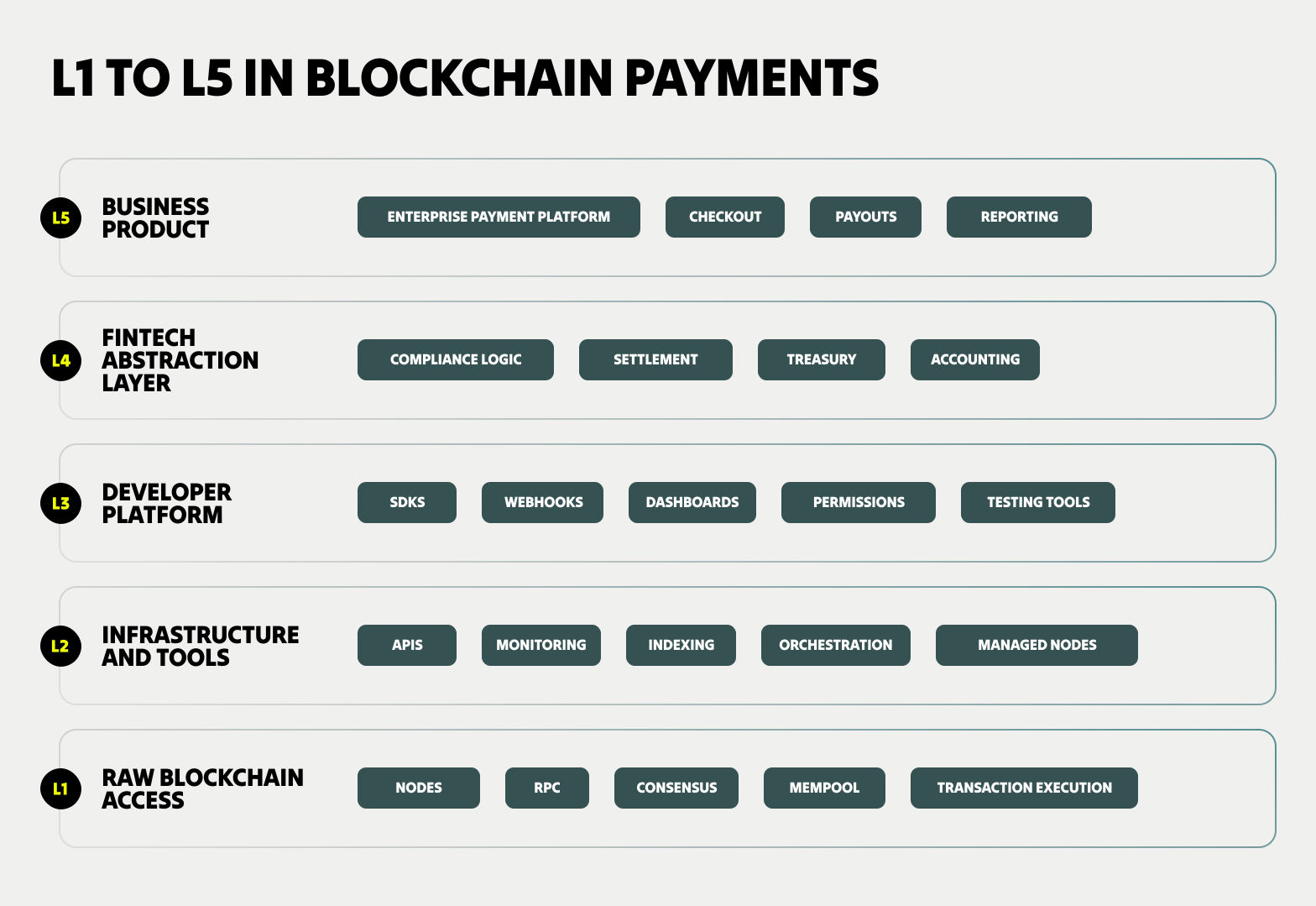
Teams do not call every chain directly because enterprise operations often go far beyond just Bitcoin or Ethereum. Companies use APIs, dashboards, alerts, and workflows that hide network-specific details because, ultimately, they are looking for business outcomes and not specific workflows on a given chain.
*A note on definitions: Ethereum uses L2 to mean scaling networks such as rollups and separate blockchains created mainly for growth and speed. We’re broadly defining L2 as an architecture layer for infrastructure and tools to focus on business use and implications.
The infrastructure layer in blockchain contains the systems that allow businesses to build reliable payment systems.
Nodes and RPC Access
Nodes are the access points to blockchain networks. RPC, a remote procedure call, is a protocol that lets software read chain state, submit signed transactions, and check statuses. For example, networks like Solana and Ethereum provide robust RPC documentation that helps developers read raw blockchain data and subscribe to updates.
APIs and Middleware
Blockchain APIs turn chain-specific commands into product-level actions. Middleware maps assets, fees, confirmations, errors, and network data into a common format. For example, Ethereum Execution APIs support blockchain data queries, transactions, smart contract calls, and network monitoring.
Transaction Monitoring
Transaction monitoring tracks transfers from broadcast to final status. It checks mempool entry, confirmations, failed transfers, fee levels, reorg risk, and stuck payments. Transaction monitoring helps send status updates to dashboards, webhooks, support tools, and finance records.
Wallet Infrastructure
Wallet infrastructure manages address creation, key storage, signing rules, roles, custody model, and balance views. Businesses tend to look for wallets with transaction records, access permissions, reporting, and conversion workflows.
Compliance Tooling
Compliance tooling checks wallets, transfers, counterparties, jurisdictions, sanctions risk, and AML signals. FATF Recommendation 16, known in virtual assets as the Travel Rule, sets payment information standards for cross-border transfers. In the EU, EBA travel rule guidelines cover information checks for transfers of funds and certain crypto-assets. Infrastructure providers design modules that help businesses meet regulatory requirements.
Orchestration Systems
Blockchain orchestration coordinates actions across many tools. It sets routing, fee rules, retry logic, approval paths, settlement timing, and alert rules. Orchestration turns separate blockchain tasks into one controlled workflow.
Blockchain Data Services
Blockchain data services make raw chain records searchable. They support analytics, reporting, risk review, balance views, and product events. Most blockchains have their own block explorers but businesses tend to look for uniform systems that work with a variety of networks.
Why businesses don’t operate directly on L1
Businesses can connect directly to L1, but production use creates heavy operational work. Teams must run nodes, handle upgrades, track signatures, monitor network health, manage keys, process reorg events, and maintain support records.
This creates security exposure, too. For example, a weak RPC setup can expose private data, spending functions, or operational controls. Direct L1 use is generally seen as a poor operating model for most merchants, fintechs, and commerce platforms.
| Raw Blockchain Access (L1) | Infrastructure Layer (L2) |
|---|---|
| Node management | Managed services |
| Manual operations | Automation |
| Low abstraction | Business-ready tooling |
| High complexity | Operational simplicity |
| Chain-specific RPC calls | Standardized blockchain APIs |
| Manual transaction checks | Monitoring and alerts |
| Separate wallet logic | Wallet infrastructure |
| Raw data reads | Indexed blockchain data services |
| Direct security exposure | Access controls and signing rules |
| Separate compliance checks | Integrated risk workflows |
How blockchain infrastructure simplifies operations
Blockchain infrastructure turns network actions into repeatable workflows. It helps develop:
- APIs that standardize requests across chains.
- Automation for fees, confirmations, retries, and status checks.
- Orchestration that routes each action through the right network, wallet, risk check, and settlement rule.
- Multi-chain support with one operating view across Bitcoin, Ethereum, Tron, Solana, and other networks.
- Transaction handling with reliable status data from broadcast to final record.
- Settlement tooling that connects crypto flows to balances, reports, conversion, and payouts.
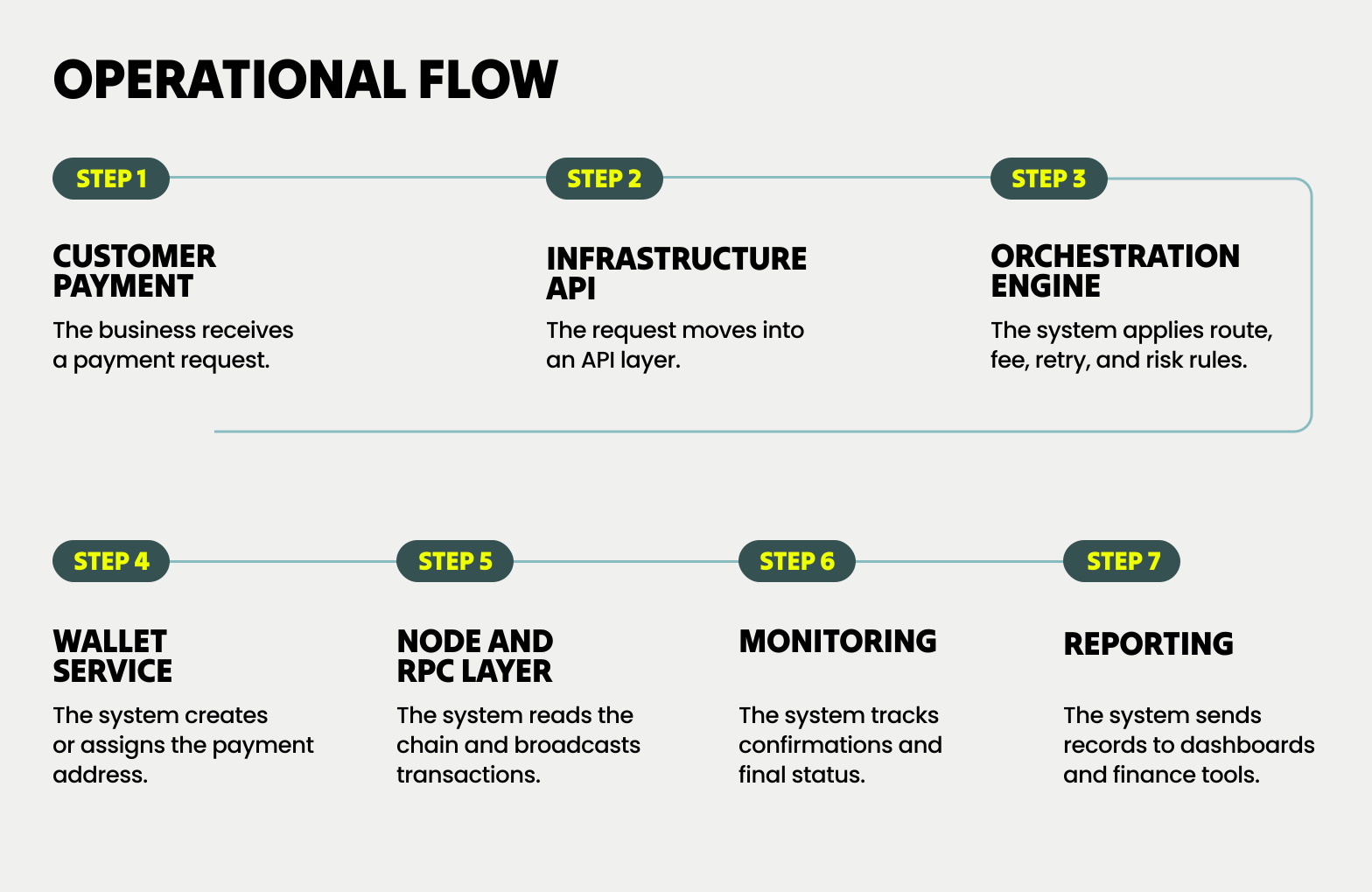
With a properly set up infrastructure, the business simply needs to send a request, and then the infrastructure handles on-chain work.
Blockchain infrastructure in practice
Blockchain infrastructure provides a backend for enterprise users who need predictable outcomes. Business-facing abstraction layers exist to help make payment workflows more cohesive, as they would otherwise be too complex. Enterprises have to consider:
- Choice of payment and network
- Payment requests, hosted checkouts, invoices
- Routing and wallet addresses
- Monitoring tools
- Risk checks and compliance
- Confirmation logic and payment statuses
- Settlement logic and conversions
- Integrations into merchant systems
- Reporting and auditing
Coinspaid Core is an infrastructure layer for digital assets created on top of raw blockchain access to help avoid the need to create separate payment systems for each individual network. Most businesses already use traditional payment gateways, and the goal of similar blockchain solutions is to align operations and standards with what most merchants are already used to.
Digital asset operations and payment workflows are incredibly complex on the ground level, but this multi-network complexity can be abstracted to deliver business results.
Why infrastructure matters more than raw blockchain access
Businesses use services, not protocols. Raw networks simply do not give teams payment operations. They’re all about blocks, raw information, nodes, and consensus.
Infrastructure turns those puzzle pieces into service flows. So, businesses get faster launch paths with less manual work and, most importantly, the ability to operate across networks. Fundamentally, a business considering integrating USDC stablecoins does not want to think about working with 5 separate Blockchain networks that support this token and tying them into a cohesive workflow.
Most enterprises aren’t interested in creating an entirely new business that operates across dozens of blockchains and manages hundreds of digital assets. Blockchain infrastructure matters more than raw blockchain access because it turns networks into operating systems for payments and asset management, aligning with the goal of creating value for end users.
FAQ
L1 is raw blockchain access. It includes base networks, blocks, nodes, consensus, and native RPC methods.
L2 infrastructure is the operational layer. It includes nodes, APIs, monitoring, wallets, compliance checks, orchestration, and data services.
Businesses need blockchain infrastructure to process payments, track transactions, manage wallets, support many networks, apply risk checks, and connect blockchain activity to finance systems.
Direct L1 use puts too much work on product, treasury, security, and support teams.
Blockchain infrastructure tools include nodes, RPC endpoints, blockchain APIs, middleware, transaction monitoring, wallet infrastructure, compliance tooling, orchestration, data indexing, webhooks, dashboards, reports, and alerts.
Blockchain payment infrastructure is the system that accepts, routes, monitors, settles, and reports digital asset payments. It connects checkout, wallet, node, risk, conversion, accounting, and payout workflows.
Blockchain orchestration is the control layer that coordinates network routes, fee rules, retries, approvals, alerts, and settlement timing. In other words, it turns separate blockchain actions into one managed workflow.