The L3 Developer Platform level is where blockchain infrastructure becomes usable for application teams. It sits above L1 raw blockchain access and L2 operational tooling, giving developers a simpler way to work with networks, transactions, wallets, and digital assets.
- At L1, teams interact with blockchain networks, consensus, blocks, transactions, and native assets.
- At L2, those networks are supported by node operations, indexing, monitoring, connectivity, and transaction-processing systems.
- L3 brings these capabilities together through blockchain APIs, blockchain SDKs, middleware, orchestration systems, and developer tools.
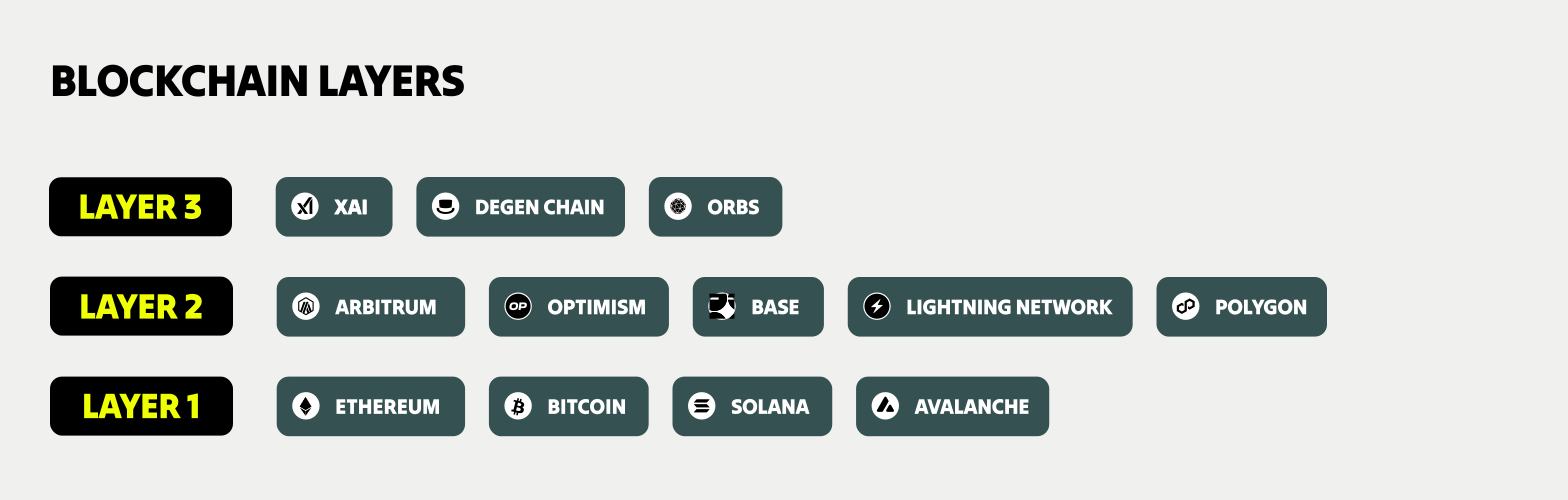
This is where developers start building products instead of maintaining blockchain systems. Wallets, payment products, exchanges, treasury tools, Web3 apps, and digital asset services can all be built through platform components with less operational work.
For blockchain applications, this abstraction is essential because every product still depends on reliable connectivity, transaction handling, security controls, monitoring, and multi-chain support. A strong blockchain developer platform turns complex blockchain infrastructure into components developers can use inside real products.
Why Developers Use Platforms Instead of Raw Blockchain Networks
Raw blockchain access gives full control, yet it creates a heavy engineering workload.
A team working at protocol level must run nodes, keep them synchronized, maintain uptime, monitor network health, handle transaction failures, secure private keys, and prepare for traffic spikes. This setup requires specialist blockchain engineers and ongoing operational support.
A blockchain developer platform reduces this workload by giving teams ready access to blockchain developer tools, blockchain APIs, transaction orchestration, wallet services, analytics, and security controls.
| Development route | What developers manage | Main workload | Best suited for |
|---|---|---|---|
| Raw blockchain access | Nodes, RPC endpoints, synchronization, monitoring, transaction handling, key security, network updates | High engineering and operations workload | Protocol teams, validators, research teams, specialist blockchain companies |
| L2 operational tooling | Node access, indexing, observability, routing, uptime, failover, support systems | Medium to high workload | Companies with in-house blockchain engineering teams |
| L3 blockchain developer platform | APIs, SDKs, orchestration, wallet tools, payment flows, dashboards, compliance services | Lower operational workload | Product teams building blockchain applications, payment products, and digital asset services |
Raw blockchain access is powerful, although it is rarely developer-friendly for product teams.
Developers need consistent APIs, reusable components, secure wallet flows, monitoring dashboards, documentation, and support for multiple networks. A developer platform provides these building blocks, allowing engineers to focus on application features, user experience, and business workflows.
What Exists Inside a Blockchain Developer Platform?
A blockchain developer platform is a development environment for building applications on top of blockchain infrastructure. It converts blockchain operations into accessible interfaces, reusable tools, and managed services.
APIs and SDKs
1. APIs are interfaces used by applications to request blockchain functions.
Blockchain APIs can help developers create addresses, check balances, estimate fees, broadcast transactions, monitor deposits, generate payment flows, and collect network data.
2. SDKs are code libraries for faster implementation.
Blockchain SDKs give developers prebuilt functions for common tasks, such as wallet creation, transaction signing, payment integration, webhook handling, and smart contract interaction.
Together, APIs and SDKs reduce custom engineering effort and improve consistency across application code.
Wallet Infrastructure
Wallet infrastructure is the set of services used to create, secure, and manage blockchain wallets.
It may include address generation, key management, wallet policies, withdrawal controls, approval workflows, and signing services.
For payment companies, wallet infrastructure supports deposits, settlements, payouts, treasury flows, and customer balances across digital assets.
Transaction Orchestration
Transaction orchestration is the coordination of blockchain transactions across systems, assets, and networks.
It helps applications select networks, prepare transactions, estimate fees, monitor confirmations, retry failed operations, reconcile balances, and update internal records.
For blockchain payment infrastructure, orchestration is essential because each payment must pass through several stages before a business can treat it as complete.
Monitoring and Analytics
Monitoring and analytics services track blockchain activity, network health, transaction status, wallet balances, and operational performance.
Developers use dashboards, alerts, logs, and reporting tools to detect failed transactions, delayed confirmations, suspicious activity, balance changes, and integration errors.
This visibility helps teams operate blockchain applications with greater stability.
Smart Contract Tooling
Smart contract tooling helps developers deploy, test, verify, and interact with smart contracts.
It may include contract templates, test environments, deployment pipelines, audit support, event monitoring, and integration libraries.
For applications using tokens, DeFi features, programmable payments, or on-chain rules, smart contract tooling reduces implementation complexity.
Compliance and Security Services
Compliance and security services help companies manage risk across blockchain applications.
They may include transaction screening, address risk scoring, sanctions checks, permission controls, withdrawal rules, audit trails, and incident monitoring.
For businesses working with payments, compliance infrastructure supports safer operations and helps meet internal policy requirements.
Multi-Chain Infrastructure
Multi-chain infrastructure connects applications to several blockchain networks through one development environment.
Developers can support assets across Bitcoin, Ethereum, Tron, Polygon, stablecoin networks, and other ecosystems through a unified set of tools.
This helps applications offer more payment options, reduce integration duplication, and support customers across multiple blockchain environments.
How Developers Build on Blockchain Infrastructure
Modern blockchain development increasingly resembles cloud-platform development.
A developer team rarely starts by managing raw network components. Instead, it connects application code to managed services, APIs, SDKs, dashboards, and automation tools.
A common build process looks like this:
| Step | Developer action | Platform role |
|---|---|---|
| 1. Define product flow | Choose use case, assets, networks, users, and transaction requirements | Provide supported networks, assets, and payment capabilities |
| 2. Connect backend | Integrate blockchain APIs or SDKs into application code | Offer endpoints, libraries, documentation, and credentials |
| 3. Configure wallets | Set up deposit addresses, signing rules, treasury wallets, and withdrawal flows | Provide wallet services and key management controls |
| 4. Orchestrate transactions | Send, receive, route, monitor, and reconcile blockchain transactions | Automate confirmations, fee handling, retries, and status updates |
| 5. Add monitoring | Track balances, failed payments, network delays, and suspicious activity | Provide dashboards, alerts, logs, and analytics |
| 6. Launch product features | Release payment, wallet, trading, treasury, or Web3 features | Maintain operational support across networks and assets |
The developer platform becomes the bridge between blockchain infrastructure and the application experience. It allows product teams to create blockchain features while relying on specialized systems for network operations.
This is why blockchain infrastructure for developers has become an important category. It gives engineering teams the same type of abstraction they already use in cloud hosting, payment processing, identity management, analytics, and messaging services.
The Role of APIs and Middleware in Blockchain Development
Blockchain APIs Explained
Blockchain APIs are access points for blockchain operations.
They allow developers to call blockchain functions from application code. A payment app, for example, can use blockchain payment APIs to create a deposit address, detect incoming funds, confirm transaction status, and update a merchant balance.
Common blockchain API functions include:
| API function | Typical use |
|---|---|
| Address generation | Create deposit addresses for users or merchants |
| Balance checks | Read wallet or address balances |
| Transaction creation | Prepare and broadcast transfers |
| Fee estimation | Calculate network costs before sending funds |
| Confirmation tracking | Monitor transaction finality |
| Webhooks | Send status updates to business systems |
| Asset support | Enable payments or transfers in multiple coins and stablecoins |
| Risk checks | Screen transactions and wallet addresses |
Middleware Abstraction
Blockchain middleware is software between application code and blockchain infrastructure.
It translates blockchain-specific operations into workflows developers can use. Middleware can normalize data across chains, manage transaction states, automate retries, trigger webhooks, and connect blockchain systems with business software.
In payment flows, middleware may connect checkout pages, merchant dashboards, wallets, accounting systems, compliance tools, and blockchain networks.
This abstraction helps developers build products across many networks without rewriting every workflow for each blockchain.
Integration Workflows and Automation
Developer platforms use APIs and middleware to automate recurring blockchain tasks.
A business may need deposit monitoring, payment status updates, settlement records, fee management, payout approvals, compliance checks, and reporting. Each task can become complex when handled manually.
A blockchain developer platform turns these tasks into repeatable workflows. This makes blockchain development faster, easier to maintain, and more suitable for business applications.
Blockchain Infrastructure in Practice
Infrastructure providers supply the underlying blockchain systems that businesses and developers use to build products and services. They bridge the gap between blockchain networks and the tools needed for payments, wallets, transaction management, compliance, monitoring, and day-to-day operations.
Coinspaid Console serves as the operational layer for digital asset infrastructure. It provides the backend systems required to process transactions, manage asset flows, connect to multiple blockchains, and support integrations without relying on direct interaction with blockchain networks.
From a technical perspective, Coinspaid Core sits behind blockchain-based products and services, helping businesses avoid the complexity of running nodes, managing transaction routing, and maintaining blockchain operations at scale.
Coinspaid Enterprise is a business-ready payment platform built on top of this infrastructure. Instead of managing blockchain systems directly, companies can use its payment capabilities through a ready-made solution designed for commercial use.
In simple terms, Coinspaid Core provides the underlying infrastructure, while Coinspaid Enterprise turns that infrastructure into a ready-to-launch payment business.
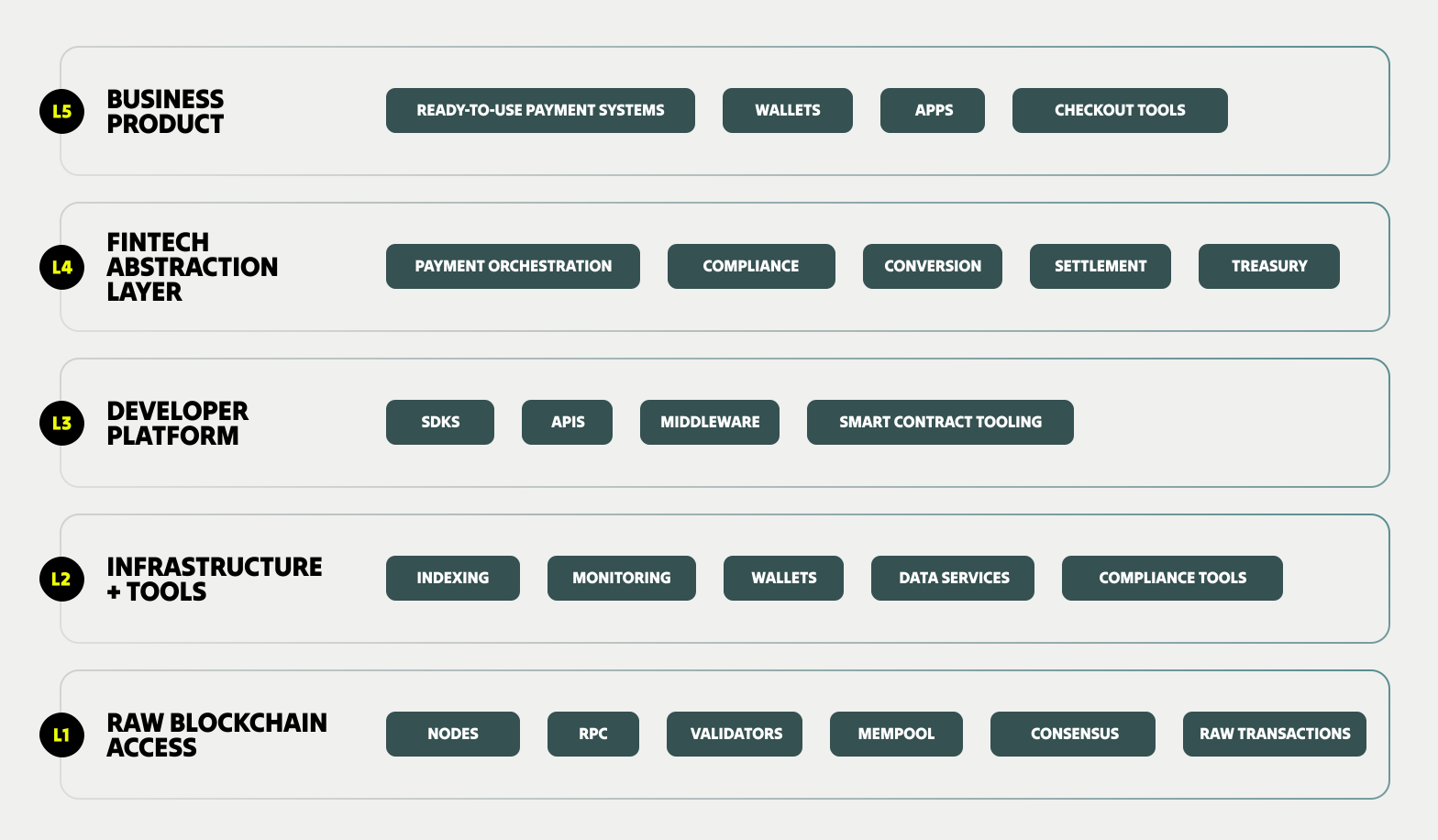
Ready-to-use payment products for merchants and enterprises
This architecture shows how blockchain complexity can move away from end users and business teams. Developers use platforms and APIs, while companies gain access to blockchain payment capabilities through operational products.
Why Developer Platforms Help Businesses
Developer platforms accelerate business adoption of blockchain technology because they reduce engineering workload and make blockchain applications easier to launch and maintain.
| Business need | How developer platforms help |
|---|---|
| Faster product launches | APIs and SDKs reduce custom development time |
| Lower operational costs | Managed services reduce node, monitoring, and maintenance workload |
| Scalable blockchain applications | Operational backends support higher transaction volumes and more assets |
| Greater reliability | Monitoring, alerts, orchestration, and failover improve service stability |
| Compliance readiness | Screening, audit trails, permission controls, and reporting support risk management |
| Reduced engineering complexity | Developers focus on product features rather than raw blockchain operations |
| Multi-chain support | Unified tools reduce duplicated integrations across networks |
| Better payment operations | Blockchain payment infrastructure supports deposits, settlements, payouts, and reconciliation |
For many companies, the central decision is how much blockchain complexity they want to own.
Building in-house can suit teams with deep blockchain engineering knowledge, large budgets, and specific protocol requirements. Using developer platforms or ready-made blockchain infrastructure can suit businesses seeking faster market entry, lower maintenance, and enterprise-grade operations.
This is especially relevant for blockchain payments. Payment products require more than wallet creation and transaction broadcasting. They need orchestration, confirmation tracking, asset support, reporting, security controls, compliance workflows, and operational continuity.
Developer tools for blockchain payments turn these requirements into manageable product components.
FAQ – Blockchain Infrastructure for Developers
A blockchain developer platform is a set of APIs, SDKs, middleware, wallet tools, orchestration systems, monitoring services, and security controls used to build blockchain applications on top of operational blockchain infrastructure.
Businesses use platforms because raw blockchain networks require node management, synchronization, monitoring, transaction handling, security controls, multi-chain support, and ongoing maintenance. A platform gives teams ready tools for building applications faster.
Blockchain infrastructure reduces operational complexity by handling node access, transaction processing, monitoring, routing, wallet operations, and network connectivity. Developers can use APIs and SDKs instead of building every blockchain component in-house.
A blockchain payment product usually needs wallet services, payment APIs, transaction orchestration, confirmation tracking, asset support, fee management, compliance screening, monitoring, reconciliation tools, and merchant-facing workflows.
Compliance infrastructure helps businesses screen transactions, assess wallet risk, apply internal policies, maintain audit trails, and monitor activity across digital assets. It supports safer operations for payment, wallet, and treasury products.
Businesses manage blockchain transaction monitoring through dashboards, alerts, logs, webhooks, analytics, and automated status tracking. These tools help teams detect confirmations, delays, failures, unusual activity, and balance changes.
Businesses expand blockchain applications across multiple networks by using multi-chain infrastructure, unified APIs, standardized wallet services, orchestration systems, and shared monitoring tools. This avoids separate custom builds for every network.
Scalable blockchain infrastructure for digital assets helps companies support higher transaction volumes, more assets, multiple networks, operational monitoring, transaction automation, and stronger continuity across blockchain-based services.
The best choice depends on the company’s goals, budget, engineering resources, security requirements, and launch timeline. In-house builds suit specialist teams with deep protocol needs, while ready-made platforms suit companies seeking faster deployment and lower operational workload.
A business should use ready-made blockchain infrastructure when it wants to launch blockchain payment, wallet, treasury, or digital asset features without spending months building node operations, transaction flows, monitoring, compliance tools, and maintenance systems.
Businesses use blockchain infrastructure providers to access operational blockchain systems, developer tools, multi-chain connectivity, wallet services, transaction orchestration, monitoring, and compliance support through managed platforms.
Blockchain infrastructure provides the technical foundation for digital asset operations, including connectivity, transaction processing, wallet services, monitoring, and orchestration. A ready-to-use payment platform packages these capabilities into business workflows such as checkout, merchant accounts, settlements, payouts, and reporting.