A fintech abstraction level is the business-facing part of modern blockchain architecture, where technical blockchain systems become usable financial workflows.
It allows companies to accept payments, manage digital assets, automate settlement, apply compliance controls, and connect blockchain operations to existing business systems without running nodes or maintaining wallet operations internally.
Within the five-level model:
- L1 provides raw access to blockchain networks;
- L2 handles operational tools;
- L3 gives developers APIs and reusable services;
- L4 converts those capabilities into fintech workflows;
- L5 delivers the final customer-facing product.
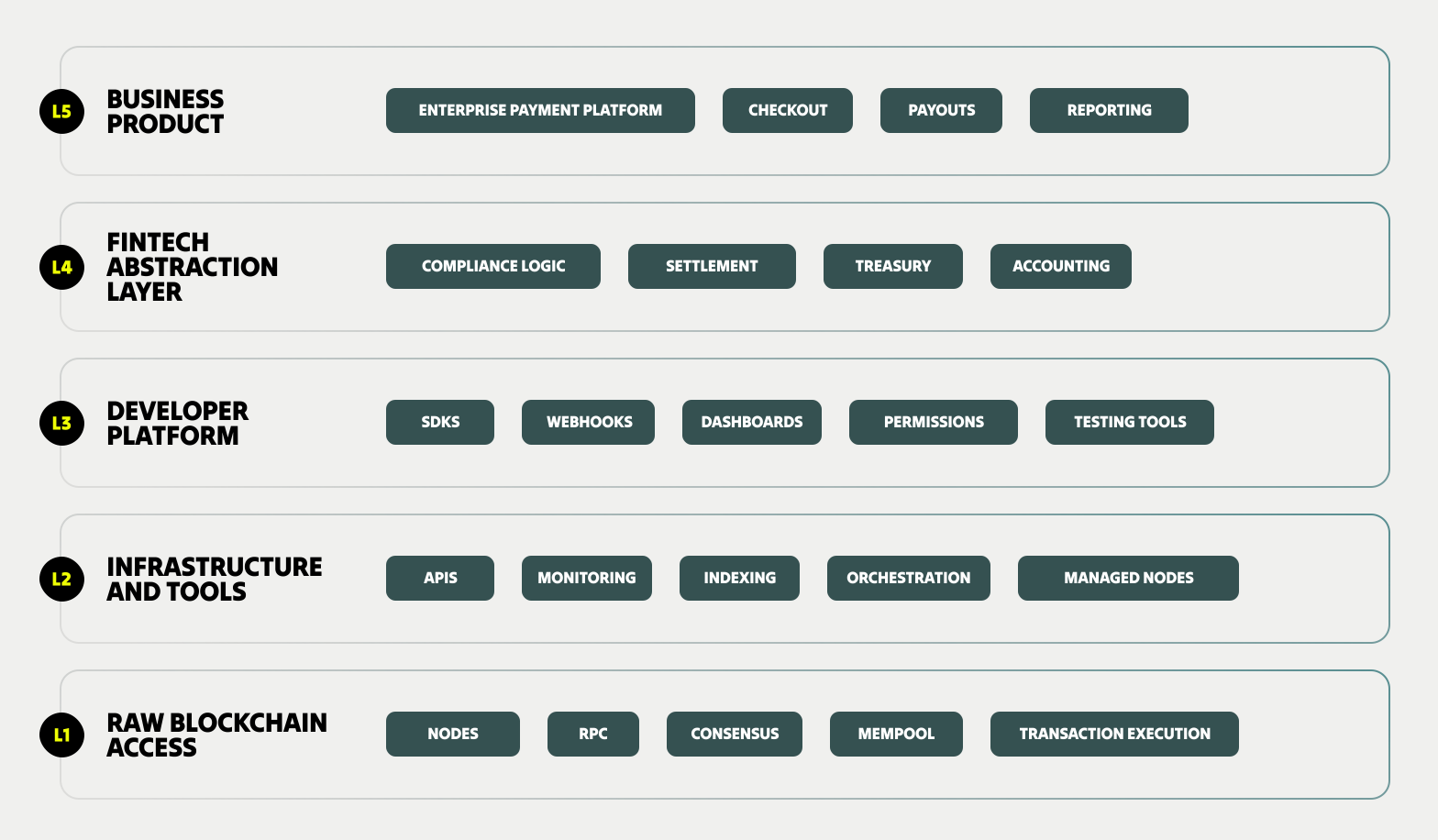
Businesses use L4 because they need stable payment operations, treasury visibility, compliance support, reporting, and faster product launch.
Running blockchain systems internally demands specialist teams, security controls, network monitoring, and continuous maintenance.
The L4 level removes most of this burden by packaging blockchain activity into APIs, orchestration systems, dashboards, settlement rules, and enterprise-ready platforms.
For payment companies, fintechs, marketplaces, and digital asset businesses, this level turns blockchain from a technical environment into an operational finance system.
Why Businesses Avoid Raw Blockchain Operations
Businesses usually want smooth payment flows and clear reporting rather than blockchain maintenance.
Raw blockchain use brings many operational tasks into the company, including node uptime, wallet creation, private key security, transaction monitoring, fee handling, confirmation tracking, and network-specific upgrades. Each blockchain network has its own rules, asset formats, fee patterns, confirmation speeds, and operational risks.
A company supporting Bitcoin, Ethereum, Tron, Polygon, stablecoins, and other networks needs separate handling for each environment unless it uses an abstraction system.
Operational Burden
Raw blockchain operations require specialist work across several areas:
- Node deployment and uptime control;
- Wallet and address generation;
- Private key security;
- Hot wallet and cold storage operations;
- Gas fee estimation;
- Transaction signing;
- Confirmation tracking;
- Failed payment handling;
- Deposit monitoring;
- Withdrawal processing;
- Asset conversion;
- Compliance screening;
- Reconciliation and reporting.
For most enterprises, this creates a large internal workload before any customer-facing product exists.
The Five-Level Blockchain Model
| Level | Main Function | Main Users | Example Capability |
|---|---|---|---|
| L1 | Raw network access | Protocol teams and blockchain engineers | Send transactions on-chain |
| L2 | Operational tooling | Technical operations teams | Run nodes and monitor transactions |
| L3 | Developer platform | Product and engineering teams | Build wallets or payment apps through APIs |
| L4 | Fintech abstraction level | Enterprises, payment teams, fintechs | Launch payment, settlement, and treasury workflows |
| L5 | Business product | Merchants, customers, end users | Accept crypto payments or manage digital assets |
The L4 level converts blockchain technology into financial operations businesses can use.
What Exists Inside the Fintech Abstraction Level
A fintech abstraction level combines payment orchestration, wallet operations, treasury tools, compliance systems, conversion services, settlement workflows, and reporting. It connects blockchain activity with business processes.
Payment Orchestration
Payment orchestration coordinates payment flows across assets, networks, wallets, and settlement options.
It helps a business create payment requests, assign wallet addresses, detect incoming funds, track confirmations, handle underpayments, update statuses, and send webhook notifications.
For blockchain payments, orchestration also manages routing across different networks and assets, which helps companies offer more payment options through one operational setup.
Wallet and Treasury Management
Wallet and treasury management controls how digital assets are received, stored, moved, converted, and settled.
A fintech abstraction level may include deposit wallets, withdrawal wallets, merchant balances, treasury accounts, approval workflows, payout controls, and internal balance tracking.
This gives finance and operations teams a business view of funds rather than a raw blockchain view.
Fiat and Crypto Conversion
Many businesses want to accept blockchain payments while keeping their accounting and cash flow in fiat or stablecoins.
Conversion tools support crypto payment acceptance, fiat settlement, stablecoin settlement, asset conversion, exchange rate management, and treasury exposure controls. This helps a merchant or fintech use blockchain payments while keeping financial records aligned with its chosen accounting currency.
Compliance and Monitoring
Compliance and monitoring are essential for enterprise blockchain payments. A fintech abstraction level may include KYB workflows, KYC integrations, AML screening, wallet risk scoring, sanctions checks, transaction monitoring, audit logs, alerts, and compliance reports.
These controls help companies process blockchain payments with more oversight and reduce manual work for compliance teams.
Multi-Network Operations
Blockchain payment activity often spans several networks. Bitcoin, Ethereum, Tron, Polygon, BNB Chain, and stablecoin networks use different formats and operating conditions.
A fintech abstraction level gives businesses one operational environment for many networks. This supports asset coverage, payment routing, transaction tracking, and settlement management across multiple networks.
Settlement and Reporting
Settlement and reporting turn payment activity into business records. This area may include crypto settlement, fiat settlement, stablecoin settlement, payout reports, transaction exports, accounting files, balance statements, reconciliation tools, and audit support.
Finance teams need these outputs because raw blockchain data requires heavy manual interpretation.
How Fintech Abstraction Simplifies Blockchain Operations
Fintech abstraction simplifies blockchain operations by replacing manual technical processes with automated financial workflows.
The business interacts with payment statuses, balances, invoices, settlements, and reports while the underlying system handles network activity.
From Blockchain Transaction to Payment Workflow
A blockchain transaction includes a hash, sender address, recipient address, fee, asset, network, and confirmation state. However, a business payment needs more context. It needs customer identity, invoice matching, payment status, settlement currency, risk screening, accounting records, and support visibility.
The L4 level connects these pieces into one workflow.
A Simplified Map
| Raw Blockchain Task | Business Need | L4 Abstraction |
|---|---|---|
| Address generation | Receive customer funds | Payment invoice or deposit channel |
| Transaction hash | Payment status | Confirmation tracking |
| Network fee handling | Cost control | Fee estimation and routing |
| Private key handling | Secure asset movement | Wallet policies and approval rules |
| Raw on-chain data | Finance visibility | Reports and reconciliation files |
| Multiple networks | Market coverage | Multi-network orchestration |
| AML checks | Compliance control | Risk scoring and monitoring |
| On-chain settlement | Business cash flow | Fiat, crypto, or stablecoin settlement |
APIs and Automation
APIs allow businesses to connect blockchain payment systems to websites, apps, finance tools, and back-office environments. A company can use APIs to create payment requests, check payment status, generate deposit addresses, send payouts, receive webhook updates, pull transaction reports, manage balances, and configure settlement preferences.
Automation reduces manual risk by detecting payments, applying compliance checks, updating statuses, triggering settlement, and preparing reports. This is where blockchain becomes usable for enterprise operations.
Build vs Buy: Why Businesses Choose Ready-Made Systems
A business can build blockchain payment systems internally or use a ready-made provider. The decision depends on the launch timeline, team capacity, security requirements, compliance workload, and product goals.
- Internal development gives more control, yet it also brings ongoing responsibility for engineering, security, monitoring, compliance, and maintenance.
- Ready-made systems offer a faster route to production, especially for companies focused on payments, fintech products, marketplaces, gaming platforms, or digital asset services.
Building Internally vs Using Ready-Made Systems
| Category | Building Internally | Using a Ready-Made System |
|---|---|---|
| Launch speed | Long development, testing, security review, and audit process | Faster production launch through prebuilt systems |
| Development cost | Requires blockchain engineers, DevOps, security, compliance, and product teams | Lower initial build burden with provider-led operational support |
| Maintenance | Internal team handles upgrades, monitoring, incidents, and network changes | Provider manages core technical operations |
| Node operations | Company runs and maintains network access | Managed access through provider systems |
| Wallet operations | Company designs wallet architecture and key controls | Wallet processes come as part of the service environment |
| Multi-network support | Separate work for each network and asset | Many assets and networks handled through one setup |
| Compliance | Internal design, integrations, screening, and reporting | Built-in or connected compliance tooling |
| Security | Full responsibility for audits, key protection, and incident response | Shared responsibility with experienced provider systems |
| Reporting | Custom reporting build required | Dashboards, exports, and API-based reports usually included |
| Best fit | Large teams with deep blockchain expertise and unique product requirements | Businesses seeking faster launch and managed operational depth |
Why Ready-Made Systems Win More Enterprise Projects
Ready-made blockchain payment systems reduce hidden costs.
- The visible cost is software development.
- The larger cost often comes from long-term operation.
Teams need to monitor networks, protect keys, update wallet systems, manage compliance rules, reconcile transactions, respond to incidents, and maintain support workflows.
A ready-made provider gives businesses access to tested components and operational processes from the start. This helps companies enter the market faster while keeping internal teams focused on product, customers, and revenue.
Blockchain Systems in Practice
Blockchain becomes useful for enterprises when it supports payment, treasury, settlement, compliance, and reporting needs. The L4 level packages technical capabilities into operational finance workflows.
Enterprise Crypto Payment Acceptance
A merchant or payment company may want to accept crypto payments from customers. Building this internally requires wallet operations, payment address creation, blockchain monitoring, confirmation tracking, exchange rate tools, compliance checks, invoice matching, settlement processes, finance reports, refund handling, and payout workflows.
An L4 fintech abstraction level packages these functions into a payment platform. The business can create payments, monitor statuses, settle funds, and export reports through one environment.
Multi-Network Digital Asset Operations
A fintech company may need support for deposits, withdrawals, balances, monitoring, and reporting across several blockchain networks.
Coinspaid Console fits this need as an enterprise-grade blockchain foundation for digital assets. It is built above raw blockchain access and supports the operational backend required for enterprise use. This type of setup helps companies build digital asset products with less internal network management.
Business-Facing Payment Platform
Some companies need a faster path to launch blockchain payment businesses under their own brand.
Coinspaid Enterprise fits this category as a ready-to-launch enterprise-level blockchain payment platform. It serves as a business-facing abstraction level, allowing companies to use blockchain payment systems without managing raw network operations.
Why Fintech Abstraction Supports Enterprise Growth
Enterprise blockchain adoption depends on usability, reliability, compliance, and operational control.
Companies may want global payment reach, faster settlement, stablecoin options, lower card exposure, digital asset treasury functions, or access to crypto-native customers.
Those goals become harder when teams must run technical blockchain operations internally. The fintech abstraction level gives enterprises access to blockchain payment systems through familiar financial tools.
Growth Benefits
| Business Goal | How L4 Supports It |
|---|---|
| Faster launch | Prebuilt payment workflows reduce internal build time |
| Market expansion | Multi-asset and multi-network support opens more payment options |
| Operational control | Dashboards, reports, and approval workflows support finance teams |
| Compliance readiness | Screening, monitoring, and audit trails support risk management |
| Higher volume | Provider systems support growing transaction activity |
Better Customer Experience
Customers care about fast, reliable payments. They need clear payment instructions, visible payment status, stable settlement handling, and fast support.
The fintech abstraction level improves this experience by automating payment detection, confirmation tracking, status updates, and reconciliation. It also helps support teams resolve payment issues without reading raw blockchain data.
Stronger Business Operations
Enterprise payment operations need resilience. Blockchain networks may experience fee changes, congestion, delayed confirmations, or unusual transaction patterns.
A fintech abstraction level helps manage these conditions through routing rules, monitoring, automation, and provider-side operations. This gives businesses a more stable way to use blockchain payment systems in live commercial environments.
The Future of Blockchain Abstraction
Blockchain adoption will move further toward business-ready systems. Enterprises want blockchain benefits with fewer technical responsibilities. Stablecoins, global settlement, digital asset treasury, and embedded payment products will increase demand for fintech abstraction.
Key Trends
- More stablecoin use: Businesses will need stronger settlement, treasury, and reporting tools.
- More multi-network activity: Platforms will need to hide network fragmentation from business teams.
- More compliance automation: AML, KYB, monitoring, and audit tools will become standard features.
- More embedded blockchain payments: Apps, marketplaces, and fintech products will add blockchain payment options.
- More enterprise demand: Providers will need to combine security, compliance, payment orchestration, and usability.
From Technical Access to Financial Systems
The next stage of blockchain adoption will focus on operational financial systems.
Businesses will choose platforms capable of launching payment products, managing assets, settling funds, monitoring risk, and supporting high transaction volume.
L4 fintech abstraction is the bridge between blockchain technology and enterprise finance.
It makes blockchain usable for companies seeking payment, treasury, and digital asset operations.
FAQ – Blockchain Payment Infrastructure
For most businesses, a ready-made blockchain payment platform offers a faster and lower-risk route. It reduces development time, technical maintenance, security work, and compliance workload.
Internal development suits companies with large blockchain engineering teams, deep payment expertise, and highly specific product requirements.
A business should use ready-made blockchain systems when it needs fast launch, multi-asset support, payment reliability, compliance tooling, and managed technical operations.
This is common for companies entering enterprise blockchain payments, expanding digital asset services, or adding crypto payment options across several markets.
Internal development requires blockchain engineers, wallet security, node operations, transaction monitoring, compliance tools, multi-network support, reporting systems, and incident response.
These requirements continue after launch. The total cost often becomes much higher than the first build phase.
Fintech abstraction layers reduce operational complexity by turning blockchain activity into APIs, dashboards, payment workflows, settlement rules, compliance checks, and reports.
Business teams work with payments, balances, settlements, and records. Technical systems handle network activity, transaction tracking, and wallet operations.
Businesses scale blockchain payment operations through multi-network orchestration. One environment can support different assets, blockchains, settlement rules, and monitoring requirements. This reduces duplicate engineering work and helps companies add new assets and networks faster.
Enterprise blockchain payment products require wallet operations, payment orchestration, transaction monitoring, multi-network support, compliance screening, settlement systems, reporting tools, APIs, webhooks, security controls, and treasury management.
Coinspaid Enterprise packages these functions into a ready-to-launch enterprise-level blockchain payment platform.
Coinspaid Core provides the backend foundation for high-volume digital asset operations.
Businesses manage blockchain compliance through AML screening, wallet risk scoring, KYB workflows, sanctions checks, transaction monitoring, audit logs, alerts, and reporting.
An L4 fintech abstraction level automates many of these processes. It gives compliance teams a more usable view of blockchain payment activity.
Blockchain infrastructure is the technical foundation for network access, transaction processing, wallet operations, monitoring, and digital asset movement.
A ready-to-use payment platform turns those capabilities into merchant workflows, dashboards, settlement options, compliance tools, and finance reports.
Scalable blockchain infrastructure helps businesses process higher transaction volume, support more assets, expand across networks, and maintain reliable digital asset operations. It also reduces the burden of running raw blockchain access internally.
This is useful for fintechs, payment companies, digital asset platforms, and enterprises building blockchain-based financial products.
Enterprise blockchain payment platforms combine payment orchestration, wallet management, compliance, settlement, reporting, and APIs in one environment.
They allow companies to use blockchain payment systems through business workflows instead of raw network operations. This gives companies a faster and more controlled path into blockchain-based payments.