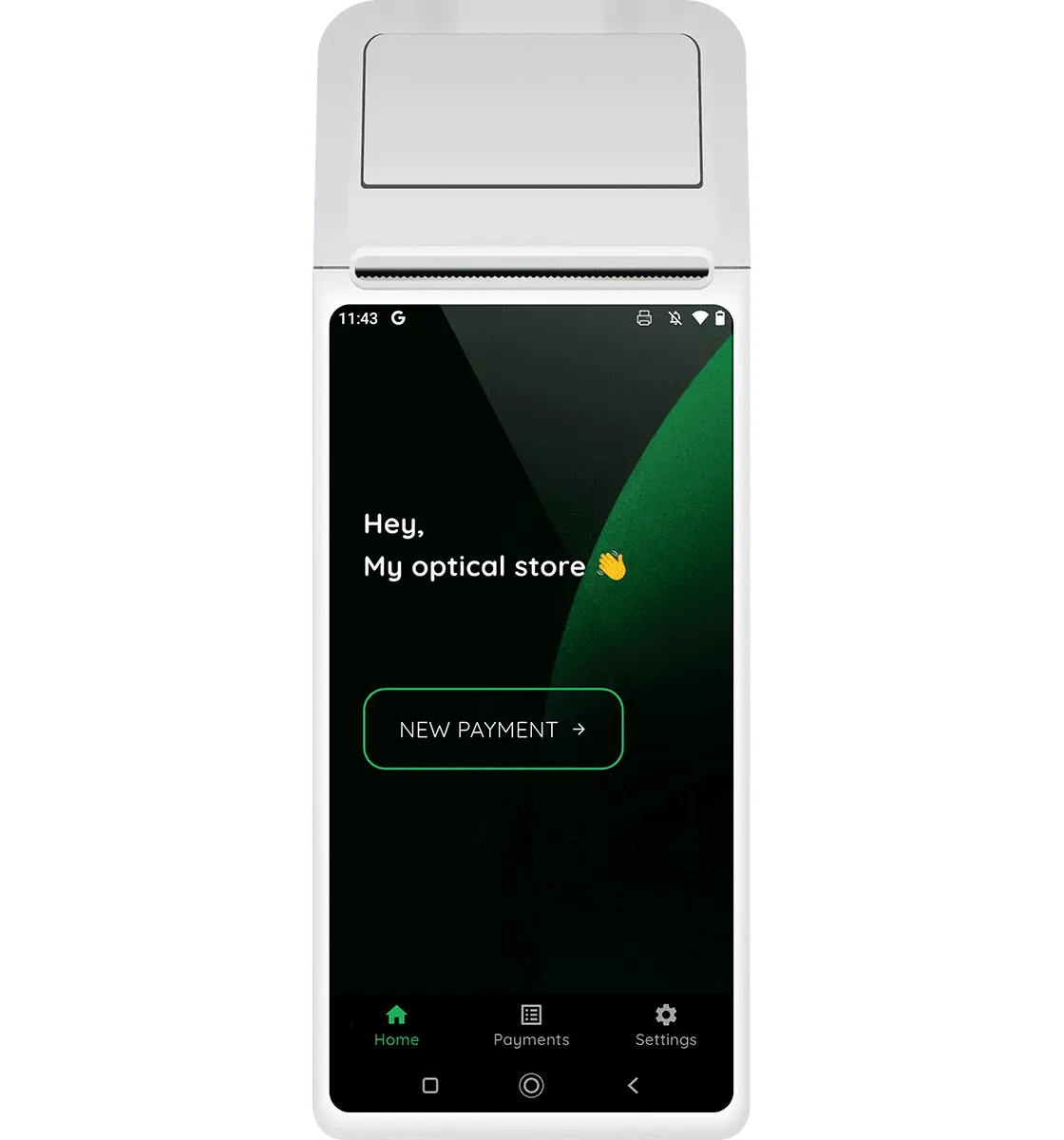
Why merchants opt for PoS
over
chargebacks in the infrastructure
over
settlements
over
availability
over
cheaper flows than
traditional cards
over
mobile wallet
users
over
of customers prefer stores that accept blockchain payments
What a blockchain PoS terminal includes
-
Payment request and QR code:
The terminal creates a payment request and shows a QR code for the customer’s wallet at checkout.
-
Rate lock at checkout:
The payment amount is usually fixed at the point of sale for a clear total.
-
Reporting and reconciliation:
Transaction data, exchange rates, and settlement records are stored by the system.
-
Final settlement model:
On-chain payments do not use card chargebacks. Refund flows depend on the merchant policy and the processor setup.
-
Gateway connection:
PoS terminals can tap into a larger network of payments.
Common blockchain PoS formats
Wallet payments on a payment terminal or on supported mobile devices.
Payment flows for self-service kiosks and custom checkout screens.
Fixed wallet QR codes for simple, low-touch payment acceptance.
Branded PoS software on top of a merchant payments stack.
Why shoppers use blockchain payments

Customers pay straight from a wallet with no exchange or ATM withdrawal.

Fast confirmations keep lines moving.

Customers avoid hidden FX spreads and see the exact total up front.

No card numbers or bank details shared at the till, reducing perceived risk.

Digital asset payments can reduce friction for travelers and users with card limits.

659M+ people worldwide already own digital assets. They are more likely to pay with it at stores.
FAQ
Understanding of blockhain assets is not required in every model. Many setups keep conversion, settlement, and reporting inside the payment stack.
Rules differ by country. The need for a license depends on the payment flow, the settlement model, and the role of the processor. Local legal review is still required.
Costs depend on the device model, software scope, payment processor, and settlement setup. Hardware, processing fees, integration work, and reporting tools all affect the total.
That depends on the processor setup. Some models settle in fiat, some in digital assets, and some in both.
Security depends on the payment gateway, custody model, device controls, and internal access rules. Common controls include ISO-aligned security practices, independent audits, cold storage, and transaction screening.
Compliance is handled during onboarding, sanctions screening, blockchain monitoring, data access controls, and record keeping. Exact requirements depend on the jurisdiction and processor role.
On-chain payments do not use card chargebacks. Refund and dispute handling follows the merchant policy and the payment processor workflow.
Supported assets vary by gateway and region. Typically this includes a PoS for Bitcoin, major stablecoins, and other popular assets.
A blockchain PoS can run as a standalone checkout tool or connect to cash register and accounting systems through an API or back-office export.
Most business setups support multi-user access, location-based permissions, and consolidated reporting across stores.