A node is a computer or server connected to a blockchain network. A node helps store, check, and share blockchain data. A crypto node can verify transactions, keep a copy of the blockchain, and help the network stay synchronized. Nodes are important because blockchains need many independent participants to confirm the same version of transaction history.
How Blockchain Nodes Work
To understand how blockchain nodes work, it helps to picture a blockchain as a shared database. This database is copied across many machines instead of being stored in one central place.
Each node connects to other nodes in the network. It receives new data, checks whether that data follows the network rules, and then passes valid data to other nodes.
When someone sends a crypto transaction, the transaction is broadcast to the network. Nodes receive it and check basic details. They verify that the sender has enough funds, that the transaction is correctly signed, and that it follows the blockchain’s rules.
Once transactions are grouped into a block, nodes check the block as well. They confirm that the block has a valid structure and fits correctly after the previous block. If the block is valid, nodes add it to their copy of the blockchain.
This process helps all participants agree on one transaction history. It also makes tampering difficult. A false transaction would need to pass checks across many independent network nodes.
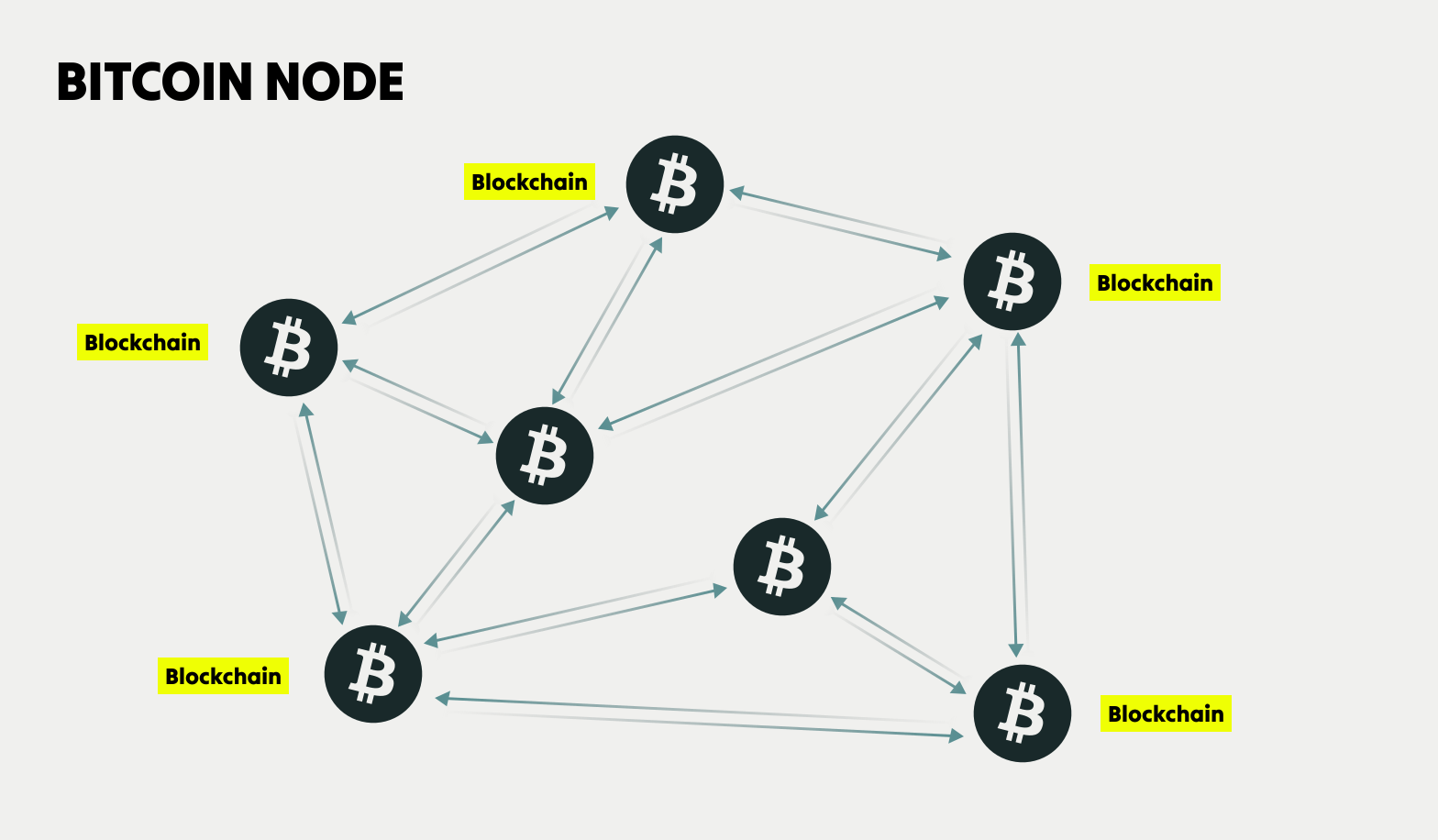
What Is a Blockchain Node?
A blockchain node is any device that participates in a blockchain network by storing, validating, or sharing data. Some nodes keep a full copy of the blockchain. Others store a smaller amount of data and rely on full nodes for verification.
The exact role depends on the blockchain. Bitcoin, Ethereum, Solana, Litecoin, and other networks all use nodes, but their node requirements can differ.
A node acts like a network participant with a specific job. It helps the blockchain remain available, accurate, and resistant to single points of failure.
A node can run on a personal computer, a dedicated server, cloud hosting, or enterprise-grade systems. The setup depends on storage, bandwidth, uptime, and performance needs.
Types of Blockchain Nodes
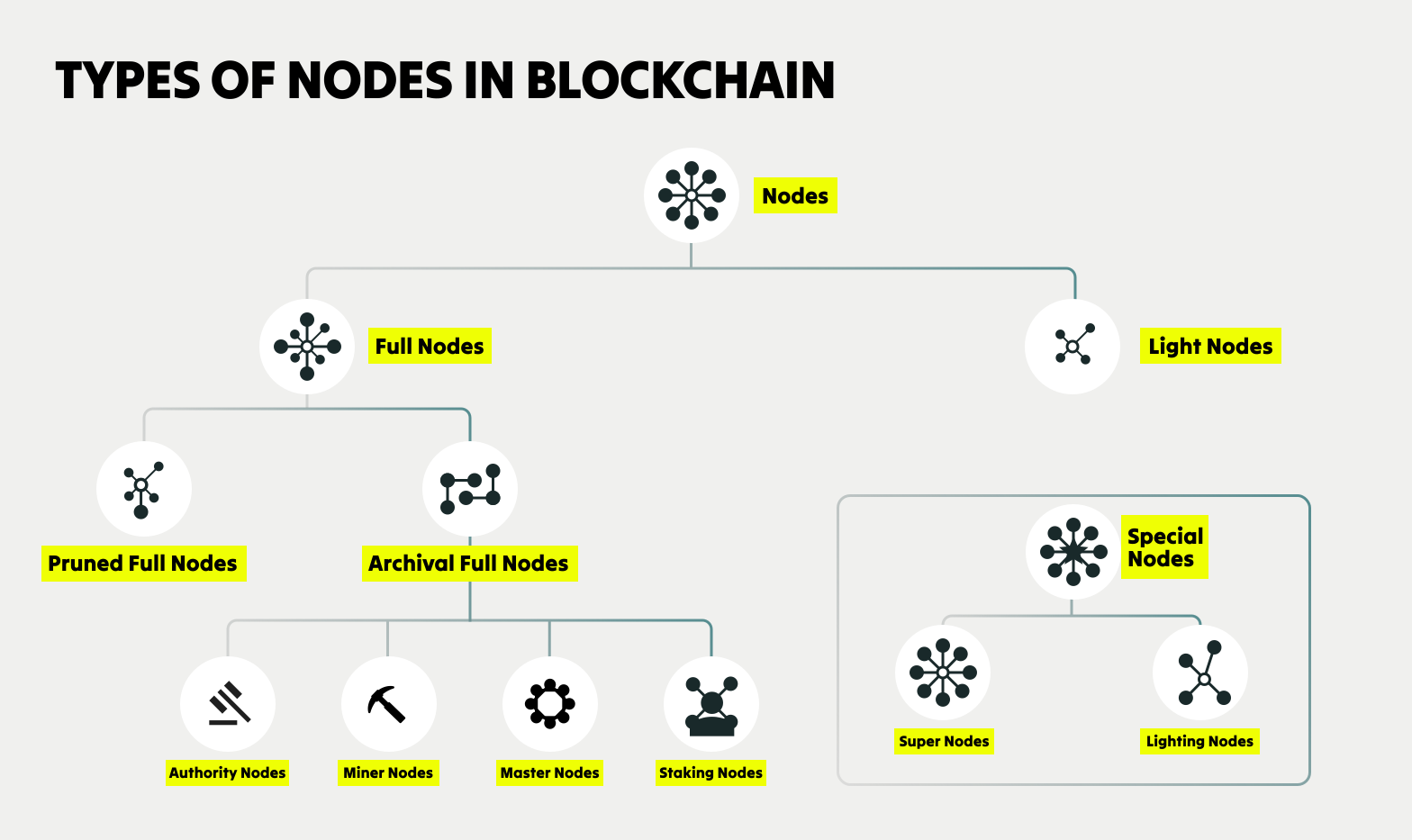
There are several types of blockchain nodes. Each type supports the network in a different way.
Full Nodes
A full node stores the complete blockchain history. It checks every block and transaction against the rules of the network.
Full nodes are important because they verify data independently. They do not need to trust another participant to know whether a transaction is valid.
For example, a Bitcoin full node downloads the full Bitcoin blockchain and checks transactions according to Bitcoin’s consensus rules. This gives the operator a high level of independence.
Light Nodes
A light node stores only part of the blockchain data. It connects to full nodes to request information when needed.
Light nodes are common in wallets and mobile applications because they require less storage and computing power. They are easier to run, but they depend more heavily on full nodes.
The difference between full node and light node comes down to independence and resource use. Full nodes verify more data themselves. Light nodes are faster and easier to operate.
Mining Nodes
Mining nodes appear in proof-of-work networks. They help create new blocks by solving computational problems.
In Bitcoin, miners compete to find a valid block. Once found, the block is shared with the network. Full nodes then verify whether the block follows the rules.
Validator Nodes
Validator nodes are used in proof-of-stake networks. They help confirm transactions and create new blocks based on staked assets and network rules.
Ethereum, after its transition to proof of stake, relies on validators rather than miners. Validators propose and attest to blocks.
Archive Nodes
Archive nodes store the full history of blockchain states. They are useful for analytics, explorers, developers, and applications that need historical data.
These nodes often require more storage than regular full nodes.
Blockchain Nodes and Infrastructure
Blockchain infrastructure depends heavily on nodes. Without nodes, a blockchain network cannot process transactions, share data, or maintain a common record.
Nodes support the basic functions of crypto networks. They keep copies of the ledger. They distribute new transactions. They verify blocks. They help wallets, exchanges, explorers, payment systems, and decentralized applications interact with the blockchain.
Reliable crypto network nodes are especially important for services that need stable uptime. If nodes are poorly managed, applications may face delays, failed requests, or outdated data.
For businesses, node management often includes monitoring, backups, access controls, load balancing, and security checks. These functions help systems stay connected to blockchains under heavy usage.
Nodes in Practice: From Networks to Payment Systems
Blockchain-based payment systems rely on node-based systems to read transactions, broadcast payments, track confirmations, and monitor network status.
For example, when a merchant accepts a payment on the blockchain, the system needs to detect the incoming transaction. It also needs to confirm when the payment has enough blockchain confirmations. This process depends on accurate node data.
CoinsPaid operates as a provider of blockchain payment infrastructure. Its systems work on top of blockchain networks that rely on nodes for transaction validation and data availability.
Importantly, node reliability affects payment processing quality. A payment platform needs access to accurate blockchain data, stable network connections, and consistent confirmation tracking.
Reliable node management also supports risk controls. Payment systems need to identify payment status, detect delays, and reconcile blockchain activity with internal records.
Can You Run Your Own Node?
In general, running a node involves choosing a network, downloading the official node software, syncing blockchain data, and keeping the node online.
A full node usually needs enough disk space, memory, bandwidth, and stable power. Bitcoin full nodes can run on consumer hardware, although storage requirements grow over time. Ethereum nodes usually require stronger hardware and careful maintenance.
Users run nodes for different reasons. Some want more privacy. Some want independent transaction verification. Developers may run nodes to build applications. Businesses may run nodes to support payment systems, analytics, or custody operations.
Running a node gives more control, but it also adds responsibility. The operator must maintain the software, monitor performance, and handle updates.
Challenges of Running Crypto Nodes
Nodes bring technical and operational challenges.
- Storage is one major issue. Blockchains grow over time, and full nodes need enough disk space to store historical data.
- Bandwidth is also important. Nodes constantly communicate with other nodes. Poor connectivity can slow synchronization and affect reliability.
- Security requires attention. A node should run on a protected system with regular updates and limited access. Exposed systems can create operational risk.
- Maintenance is another challenge. Blockchain software changes over time. Node operators need to apply updates, monitor logs, and respond to errors.
Businesses often need multiple nodes, backup systems, performance monitoring, and failover protection. This is especially important for payment systems and other services that depend on live blockchain data.
The Future of Nodes
Nodes will remain a core part of blockchain networks. As crypto adoption grows, node systems will likely become more specialized.
Some networks are working on lighter node designs. These can make participation easier for users with limited hardware. Other networks are improving validator performance, data availability, and synchronization speed.
Enterprise node systems are also becoming more advanced. Payment providers, exchanges, custody platforms, and analytics companies need fast and stable access to blockchain data.
At the same time, decentralization remains important. A healthy blockchain needs many independently operated nodes. This helps reduce reliance on single providers and keeps network rules enforceable by many participants.
Ultimately, nodes are the machines that keep blockchains alive. They verify data, distribute transactions, and help the network agree on a shared record. Understanding nodes is essential for understanding how crypto systems work.